
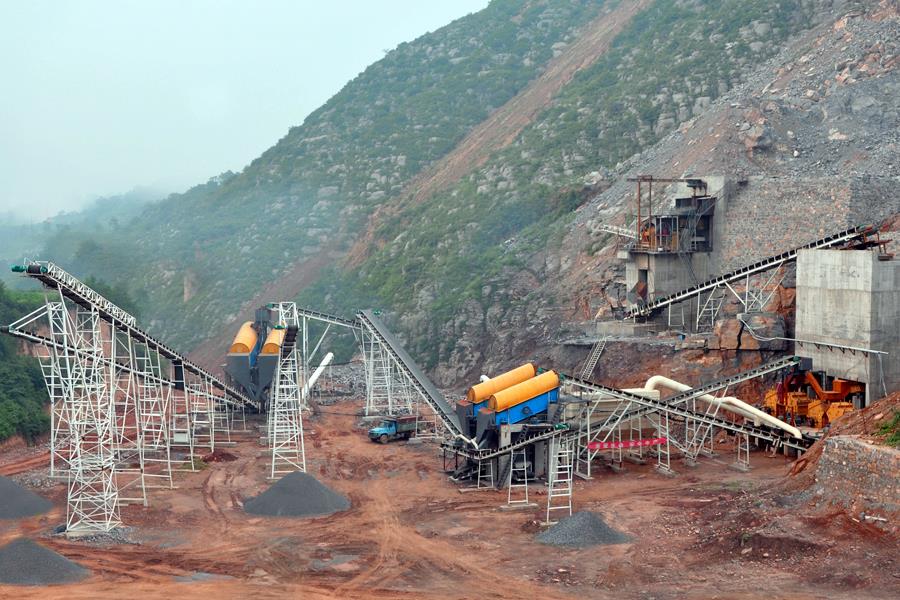
70 TPH Gypsum Mobile Crushing Line Price in Mexico City Mexico
Why Mexico City's Gypsum Processors Are Looking at Mobile Crushing Now
Mexico City is not short of construction work. The metropolitan area continues to expand outward and upward, and gypsum sits underneath much of that activity — in plasterboard for interior partitions, in cement as a set regulator, and in agricultural soil amendment for the surrounding farmland. Mexico's gypsum board market alone was valued at USD 498.2 million in 2025 and is projected to reach USD 743.0 million by 2034, growing at a compound annual rate of 4.40%. The domestic gypsum market shows a similar pattern, moving from 3.69% growth in 2025 to a peak of 5.00% in 2027 before settling toward 3.24% by 2029.
What that growth means for a processor is not simply more volume. It means more pressure on the crushing stage. Gypsum arrives at the plant in a range of sizes depending on the mine and the transport method, and the crushing circuit determines whether the material leaving the gate meets the specifications that plasterboard manufacturers and cement plants actually buy. A 70 TPH mobile crushing line is a practical answer to that problem for operators who need to process material close to the source rather than hauling raw ore across the city.
What Gypsum Actually Demands from a Crushing Circuit
Gypsum is a soft mineral. It sits at roughly 2 on the Mohs scale, and it breaks readily under compression or impact. That sounds like an easy crushing job, and in some ways it is. But gypsum has two characteristics that shape equipment selection. First, it generates fines readily. Impact and hammer crushers can reduce gypsum to powder in a single pass, which is useful for some applications but wasteful for others. Second, gypsum can carry moisture, particularly in the rainy season, and wet gypsum sticks to screens, chutes, and crusher chambers.
For a 70 TPH line, the practical configuration depends on the target product. If the output feeds a plasterboard plant, the requirement is a consistent particle size distribution with controlled fines. If the output feeds a cement kiln or an agricultural market, the tolerance for fines is wider. A jaw crusher for primary reduction followed by an impact crusher or a hammer crusher for secondary sizing is the common arrangement. The screen configuration matters as much as the crushers: a multi-deck screen with adequate open area and, where moisture is a problem, polyurethane panels rather than woven wire.
Why Mobile Instead of Fixed in Mexico City's Context
A fixed crushing plant requires foundations, civil works, and a permanent site. That makes sense for a quarry with a 20-year reserve and a stable haul road. It makes less sense for a processor who is working a deposit with a shorter life, or who needs to move between sites as permits and land access change.
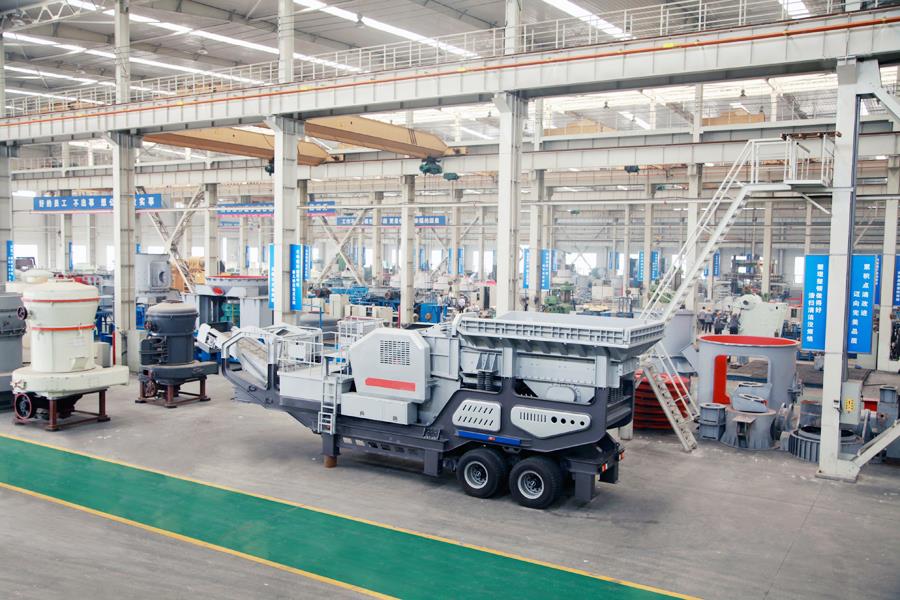
Mobile crushing lines have become more common in Mexico for precisely this reason. A documented 60–100 TPH four-in-one mobile crushing plant operating in Mexico processes hard granite with a wheel-mounted chassis combining a vibrating feeder, jaw crusher, cone crusher, and multi-deck screen on a single platform. That installation was designed to avoid the capital cost and site restrictions of a fixed plant, and it produces 0–20 mm aggregate and manufactured sand with integrated dust suppression.
For gypsum, the same logic applies. A mobile line can be positioned at the mine, at a transfer point, or at a processing yard, and relocated when the need changes. It does not require the same permitting footprint as a fixed installation, and it can be commissioned faster.
What a 70 TPH Gypsum Mobile Line Costs
Equipment pricing for a mobile crushing line in this capacity class varies with configuration, chassis type, and automation level. Publicly listed ranges for mobile crushing plants in the Mexican and South American markets run from approximately USD 80,000 to over USD 900,000, with a 50–80 TPH compact mobile jaw plant with optional screen falling in the USD 80,000–180,000 range.
A 70 TPH gypsum-specific mobile line — combining a jaw crusher, a secondary impact or hammer crusher, a vibrating screen, and the necessary conveyors on a wheel-mounted or tracked chassis — typically lands in the USD 150,000 to USD 320,000 range depending on automation and wear part specification. The table below gives an indicative breakdown.
| Component | Indicative Price (USD) | Notes |
|---|---|---|
| Mobile jaw crusher station | 80,000 – 150,000 | Primary reduction, grizzly feeder |
| Mobile impact or hammer crusher | 45,000 – 90,000 | Secondary sizing, adjustable gap |
| Vibrating screen unit | 30,000 – 65,000 | Multi-deck, PU panels for wet feed |
| Belt conveyors and transfer chutes | 20,000 – 45,000 | Sized to full flow |
| Control and monitoring panel | 10,000 – 25,000 | PLC-based, optional remote |
| Dust suppression system | 10,000 – 25,000 | Spray bars, enclosed transfer points |
Reference pricing only. Actual quotations depend on final configuration, shipping terms, and optional features. Please confirm current pricing with our online customer service.
These are equipment costs. Freight to Veracruz or Manzanillo, inland transport to Mexico City, customs clearance, foundations (minimal for a mobile plant), commissioning, and an initial stock of wear parts add a further layer.
The Import Duty and Compliance Layer
Mexico‘s tariff schedule changed on 1 January 2026, with adjustments to approximately 1,400 tariff lines across multiple sectors. Mining machinery classified under HS 8430.41.01 carries a 5% MFN duty for imports from China, as Mexico and China do not share a free trade agreement. Value-added tax applies at 16% on the customs value, and a customs processing fee of 8 per thousand is levied on the transaction.
For a 70 TPH mobile crushing line, the applicable HS code should be confirmed with a customs broker before shipment. The classification determines the duty rate, and the documentation requirements — commercial invoice, certificate of origin, technical documentation — should be prepared in advance. Working with a supplier who has exported to Mexico and can provide the technical specifications that customs authorities expect reduces the risk of a shipment sitting in port.
On the environmental side, the relevant regulation for particulate emissions from fixed sources is NOM-043-SEMARNAT-1993. It sets maximum permissible emission levels for solid particles based on gas flow rate and location, with stricter limits in critical zones that include the Mexico City metropolitan area. A mobile crushing line operating in or near the city should be specified with integrated dust suppression — spray bars at the crusher discharge and conveyor transfer points, and enclosed chutes where practical — to stay within those limits.
Matching the Machine to the Material, Not the Catalogue
A 70 TPH gypsum line that works well in one operation may underperform in another because the feed is different. Gypsum from one mine may be soft and dry; from another, it may carry clay and moisture that causes the screen to blind. The crusher gap setting, the screen aperture, and the conveyor capacity all interact, and the right combination is specific to the deposit.
Before requesting a quotation, it helps to know the top size of the feed, the moisture content during the wet season, and the target product size. If a sample of the ore is available, a work index or abrasion test makes the recommendation more precise. The more specific the input, the more useful the quotation.
How OCP Mechanical Company Approaches Gypsum Mobile Crushing Projects
OCP Mechanical Company has manufactured mining and processing equipment for over 40 years. We build mobile jaw crushers, mobile impact crushers, mobile cone crushers, vibrating screens, feeders, sand washers, and complete mobile crushing and screening plants. For a 70 TPH gypsum mobile crushing line in Mexico City, our engineering team can configure the plant around your specific feed characteristics and target product, whether that means a wheel-mounted chassis for road transport, a tracked unit for on-site mobility, or a screen specification that handles wet gypsum without blinding.
Because we sell direct from our factory, there is no distributor margin in the price. Our technical team works with you on the layout and equipment selection rather than handing over a catalogue. And our online customer service team is available 24 hours a day to discuss specifications, provide updated pricing, and help you work out which configuration suits your site.
If you are evaluating a gypsum crushing project in Mexico City, click the chat button and start the conversation.
-
What Affects the Capacity of a Jaw Crusher for River Pebble 120 TPH
-
-
230 TPH Iron Ore Vibrating Feeder Selection for Heavy Duty in Brazil
-
-
Metso Extends South American Wear Parts Agreement Worth EUR 10 Million a Year



