What types of crushers are required for copper ore processing
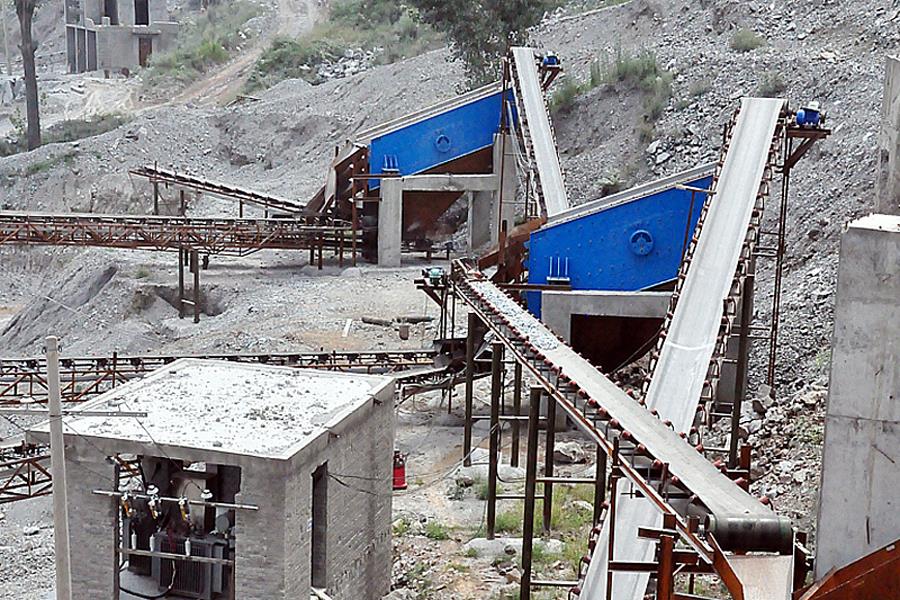
Copper ore typically comprises a mixture of copper sulphides and oxides. Mineral processing plants commonly employ flotation to enhance ore grade, facilitating subsequent smelting to produce pure copper. The copper ore processing workflow primarily encompasses three stages: crushing, grinding, and mineral separation. During crushing, three-stage closed-circuit crushing represents the modern method best suited for high-hardness copper ore. This process achieves both ore fragmentation and partial liberation, thereby enhancing subsequent grinding efficiency. For grinding, a two-stage closed-circuit grinding system ensures more thorough processing of the copper ore. In mineral processing, the representative technique is primarily the mixed flotation process. What equipment is primarily involved in a copper ore production line?
A. Feeding — Vibrating Feeder
Vibrating feeders are extensively employed in metallurgy, coal mining, mineral processing, and building materials industries. They uniformly and continuously convey lump copper ore to subsequent crushing equipment while performing preliminary screening prior to crushing.
B. Primary Crushing — Jaw Crusher
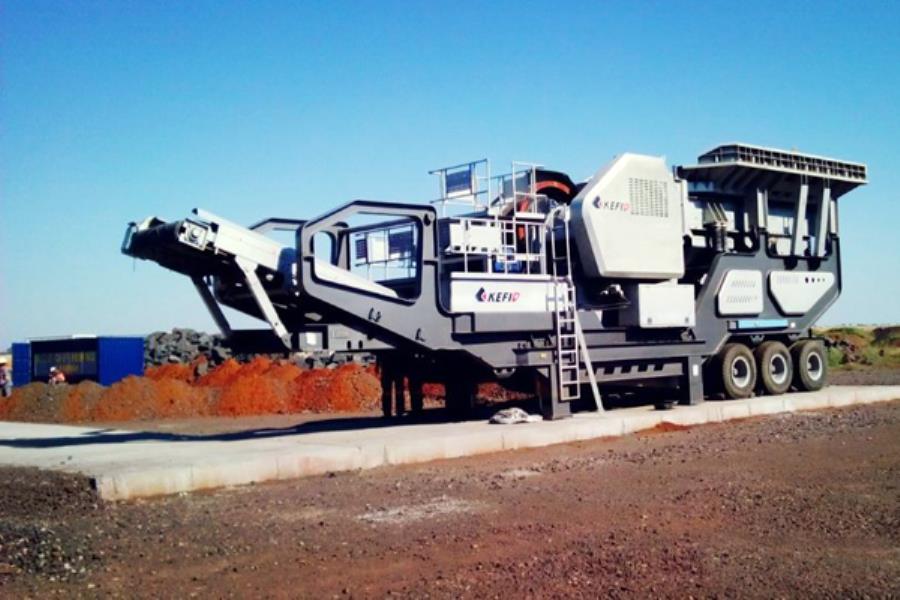
The jaw crusher is primarily employed for coarse crushing in sand and gravel plants, metallurgy, mining, and chemical industries. It can handle feed sizes up to 1500mm, producing output sizes ranging from 10-350mm. Processing capacity reaches 2000 tonnes per hour, with a maximum compressive strength of 320MPa.
Large copper ore blocks must first be crushed into smaller fragments using a jaw crusher to meet the feed size requirements for secondary crushing.
C. Secondary Crushing — Cone Crusher
The cone crusher is primarily employed for secondary and tertiary crushing of medium to high-hardness ores, processing 12–1000 tonnes of material per hour.
Given the high hardness of copper ore, it is ideally suited for cone crusher processing. Output from this stage comprises finished products ranging from 3 to 60mm in size.
D. Screening – Circular Vibrating Screen
The vibrating screen separates material meeting the required feed size for subsequent processing. Simultaneously, it collects oversized and undersized material for refeeding into crushing equipment until the desired particle size is achieved.
For instance, if the cone crusher produces 3-60mm feed, but the subsequent grinding process requires ball mill feed below 20-25mm, the vibrating screen separates materials by size. Particles under 20mm proceed to the ball mill, while those over 20mm are returned to the cone crusher for reprocessing.
E. Grinding — Ball Mill
The ball mill further grinds the material into fine particles of 0-200 mesh size to meet the requirements for subsequent flotation.
The ball mill accepts feed sizes below 20-25mm and produces output sizes ranging from 0.074-0.89mm. It can process 0.65-615 tonnes of material per hour and is widely employed in industries such as cement, silicate products, new building materials, and refractories.
F. Classification – Classifier
The classifier is a specialised piece of equipment in the metal mineral processing flow for grading the particle size of the pulp. The trough length ranges from 3000 to 14300mm, with a spiral diameter of 300 to 3000mm. It primarily utilises the principle that copper ore particles and associated gangue particles have different specific gravities and settle at different rates in liquid to grade them.
G. Mineral Processing — Agitators and Flotation Machines
The flotation process requires the addition of flotation reagents to the pulp. These reagents enable valuable mineral particles to adhere more effectively to bubbles generated by the flotation machine, allowing them to rise to the pulp surface for collection. Agitators serve to mix the pulp, ensuring uniform distribution of reagents and accelerating reaction times.
H. Drying — Dryers
The copper concentrate collected via flotation contains high moisture levels, failing to meet usage standards. Consequently, it requires further dehydration.
Dryers are specialised drying equipment for mining, mineral processing, and chemical industries, handling 1.9–76 tonnes of material per hour. Beyond copper concentrate, they can dry numerous other metallic and non-metallic minerals.
Through these eight processing stages and nine types of equipment, we can successfully separate copper concentrate from raw copper ore. While numerous similar devices exist for each process, we have outlined the most commonly employed equipment. For further product information, please contact our online customer service representatives. We are at your service! Click the website chat icon for immediate free consultation, available 24 hours a day.