
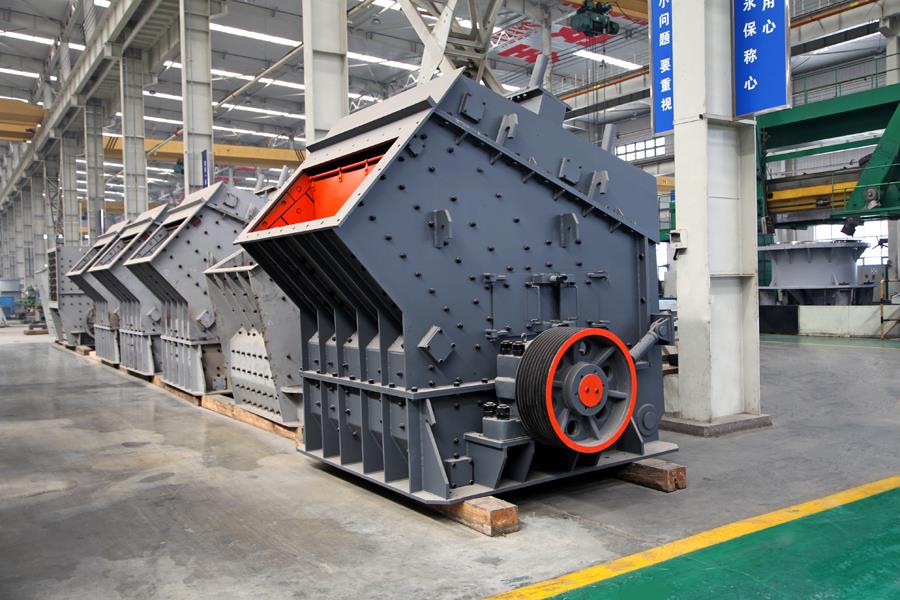
What is the difference between a stone shaping machine and an impact crusher? Which is better for stone shaping?
A stone shaping machine, also known as an impact crusher, is often called a stone shaping machine on production lines because it combines both shaping and sand-making functions. An impact crusher refers to an impact crusher, which is frequently compared to a stone shaping machine on production lines due to its superior finished particle shape. So, what are the differences between a stone shaping machine and an impact crusher? Which one is better to choose?
Before determining which is superior, we must first understand their fundamental differences. Key distinctions include:
1. Different Working Principles
The stone shaping machine employs both “stone-on-stone” and “stone-on-iron” working principles. The stone-on-stone method is suitable for medium-hard or harder materials with high corrosion resistance, such as basalt, and is primarily used for shaping with excellent particle shape. The stone-on-iron method is suitable for medium-hard or softer materials with low corrosion resistance, such as limestone, offering high output and efficiency.
Impact crushers employ an impact crushing method. The rotor spins at high speed, propelling materials into the impact plate zone where they collide with the rotor's impact plates. The materials are then thrown against the impact device for further crushing, bounce back from the impact liner, and re-enter the impact plate zone for repeated crushing. This process ensures well-shaped final products, especially when equipped with internal grate bars.
2. Different Feed and Discharge Particle Sizes
Impact crushers accept feed sizes below 50mm, with discharge sizes freely adjustable between 0-5mm.
Impact crushers accept feed sizes below 800mm, with finished products typically adjustable between 3-60mm.
3. Different Processing Capacities
Impact crushers exhibit distinct hourly production rates for shaping and sand-making applications. Specifically:
- Sand-making: 50-498 t/h
- Shaping: 90-585 t/h
Features include deep-cavity rotors for enhanced efficiency and programmable logic controllers (PLCs) enabling remote computer control for streamlined operation.
Impact crushers achieve hourly outputs of 30-800 t/h. Their optimized cavity design ensures compact structure and high rigidity, while the rotor's large rotational inertia boosts operational efficiency.
Which is better for aggregate shaping: a stone shaping machine or an impact crusher?
In summary, the stone shaping machine produces uniform finished products with minimal needle-like particles and stone powder, free from cracks or fine cracks. Its adjustable fineness modulus makes it ideal for artificial sand production and aggregate shaping. The impact crusher delivers aesthetically pleasing output with low powder content, meeting construction standards. Each machine serves distinct purposes. Users requiring sand production or finer particle sizes should prioritize the shaping machine. For materials with lower hardness where initial investment savings are desired while still meeting standards, the impact crusher is recommended.
For detailed information about production lines, feel free to consult OCP customer service online. We can provide comprehensive technical specifications, guide your equipment selection, and customize production equipment and solutions tailored to your specific needs. Inquire now to receive this month's special offer!
-
Complete Equipment Set for Producing 12mm and 13mm Aggregate: Pricing and Process Flow
-
What are the configuration options for stone crushing production lines
-
-
-
What are the complete sets of equipment for a 300-mesh dolomite grinding production line