
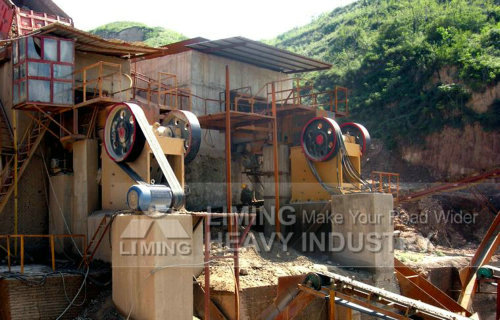
What Is the Best Feeder for Sticky Bauxite 190 TPH in Guinea
Guinea‘s Bauxite Boom: A Market of Unprecedented Scale and Challenge
Guinea stands as the world’s leading bauxite exporter, a position cemented by extraordinary production figures and vast reserves. The country‘s bauxite production continues to expand, with new entrants like Nimba Mining targeting 10 million tonnes of shipments in 2026 and aiming for at least 14 million tonnes of annual production within two to five years. Major operators including SMB-Winning Consortium, Chalco, CBG, and CDM China are driving sustained production growth across the Boké region and beyond. However, Guinean bauxite presents unique handling challenges that distinguish it from ores found in other regions. Bauxite from Guinea‘s Boké region is typically lateritic with high viscosity and high moisture content, making it prone to adhesion, blockage, and inefficiency during handling and processing. The sticky nature of bauxite, especially in high humidity environments, demands specialised handling equipment to prevent blockages and ensure consistent flow rates. For operators planning a 190 TPH bauxite feeding operation in Guinea, selecting the right feeder is not merely a technical decision—it is a strategic investment that directly impacts primary crusher performance, plant availability, and overall profitability.
Understanding Sticky Bauxite and Its Impact on Feeder Selection
Guinean bauxite is notoriously challenging to handle due to its material properties. The ore is characterised as both sticky and free-flowing depending on moisture content, adding complexity to handling and transport processes. At critical moisture contents, Guinean bauxite becomes very sticky and can choke up equipment. Bauxite can be a difficult mineral to process because of its sticky texture when wet. Even in dry months, at its lowest moisture content, the material builds up in transfer chutes that require frequent cleaning. For a 190 TPH bauxite feeding application, these characteristics mean that traditional feeding methods—designed for dry, free-flowing materials—are often ineffective. The feeder must be capable of handling high-viscosity material without clogging, absorbing large surge loads from truck haulage equipment, and providing an even, regulated flow of material to downstream processing. When material sticks to feeder pans, hopper outlets, or discharge chutes, the system may suffer from uneven feeding, motor overload, belt spillage, and unplanned shutdowns.
Apron Feeders: The Industry Standard for Sticky Bauxite
When evaluating which feeder is best for sticky bauxite 190 TPH in Guinea, the apron feeder emerges as the proven industry standard for handling difficult, sticky ores. Apron feeders excel in handling bulky, heavy materials such as bauxite, iron ore, or clay with high moisture content (e.g., over 10%). They are built to withstand wet, sticky or clay-like material and handle it with ease. The positive displacement design of apron feeders—featuring overlapping steel plates (aprons) mounted on chains that drag materials across a robust frame—makes them vastly superior for wet, sticky, or clay-bound ores that would absorb vibration and get stuck in other feeder types.
Key advantages of apron feeders for sticky bauxite applications include:
Superior handling of sticky materials: Apron feeders prevent feeding problems no matter how dirty and sticky the fed material is. The smooth apron plate surface avoids material adhesion, meeting the conveying demands of various complex materials.
High impact resistance: Apron feeders are designed to handle high-impact loads from coarse materials dumped directly onto them. They can handle large feed sizes and absorb the heavy冲击 of run-of-mine bauxite from truck haulage.
Proven reliability in Guinea: Major bauxite projects in Guinea have successfully deployed apron feeders. TAKRAF supplied apron feeders for a bauxite expansion project in Guinea, and the Bon Ami Project incorporated apron feeders as part of its barge loading system. The GIC bauxite mine project in Guinea has also adopted a technical solution integrating high-efficiency apron feeders to achieve a 30% improvement in loading efficiency and a 50% reduction in system failure rate.
Long service life: Apron feeders are built for toughness with heavy-duty components like manganese steel aprons and can last over a decade in harsh conditions. This durability is essential in Guinea‘s demanding mining environment.
Vibrating Feeders: Why They Struggle with Sticky Bauxite
While vibrating feeders are an excellent choice for dry, free-flowing materials, they are generally not suitable for sticky bauxite. Vibrating feeders use high-frequency motors to “bounce” material forward and are great for dry, hard rocks. However, sticky materials absorb vibration and get stuck. Traditional vibrating feeders and grizzly feeders are not effective at scalping product when handling wet, sticky bauxite. In some cases, operations have replaced vibrating feeders with apron feeders specifically because vibrating feeders were not suitable for sticky material. For a 190 TPH sticky bauxite application in Guinea, a vibrating feeder would likely experience frequent blockages, uneven feeding, and excessive downtime—making it a poor investment despite its lower upfront cost.
Wobbler Feeders: A Specialised Alternative for Scalping
For applications where scalping fines from the feed is a priority, the wobbler feeder offers a specialised alternative. Wobbler feeders excel where others fail—in situations too wet and sticky for other feeders and scalpers. They are self-cleaning and can handle wet sticky bauxite, making them ideally suited to this application. Wobbler feeders receive raw, unprocessed bulk material and use a wobbling motion to separate fine particles, feeding only oversized material to the crusher while allowing fines to bypass it. They are exceptionally effective for challenging materials that cause problems for traditional feeders, including wet, sticky, clayey, or friable ores.
However, wobbler feeders are primarily scalping devices rather than primary feeders. In many bauxite operations, the optimal configuration combines an apron feeder to handle the sticky bulk material with a wobbler feeder or vibrating grizzly downstream to scalp fines before the crusher. For a 190 TPH bauxite feeding application, the primary feeder should be an apron feeder, with optional scalping equipment downstream if fines removal is required.
Key Selection Criteria for a 190 TPH Bauxite Feeder in Guinea
When selecting the best feeder for a 190 TPH sticky bauxite application in Guinea, operators should consider several critical factors:
Material moisture content: Guinean bauxite can exceed 10% moisture, making apron feeders the preferred choice.
Feed size and lump size: Run-of-mine bauxite can contain lumps up to 150 mm or larger. Apron feeders are designed to handle large lump sizes without clogging.
Capacity requirements: For a 190 TPH application, a medium-duty apron feeder with appropriate width and speed is sufficient. Apron feeders are available in capacities from 10 to over 5,000 TPH.
Hopper and chute design: To prevent blockages, operators should ensure large hopper outlets, smooth liners, proper wall angles, and cleaning scrapers. A variable-frequency drive can help adjust feeder speed according to real working conditions.
Maintenance accessibility: In Guinea‘s remote mining locations, ease of maintenance is critical. Apron feeders require periodic chain lubrication and apron inspections.
OCP Mechanical Company: Factory-Direct Feeder Solutions for Guinea‘s Bauxite Sector
With over 40 years of manufacturing experience and exports to more than 180 countries and regions worldwide, OCP Mechanical Company brings proven expertise to Guinea’s expanding bauxite mining sector. Our product range includes heavy-duty apron feeders specifically engineered for sticky, high-moisture materials like bauxite, alongside jaw crushers, cone crushers, impact crushers, VSI crushers, vibrating screens, and complete crushing and screening plants—all brand-new and built to rigorous quality standards.
We understand the specific requirements of bauxite operations in Guinea: equipment must handle high-viscosity, abrasive material while delivering consistent throughput and minimising downtime in remote, challenging environments. As a direct factory manufacturer, we eliminate distributor margins, passing the savings directly to you. This is particularly valuable in the Guinean market, where import costs and logistics can add significant expense to capital equipment purchases. All price information provided is for reference only; final quotes depend on equipment configuration, shipping terms, optional features, and current exchange rates.
Our apron feeders feature heavy-duty chains, wear-resistant pans, and sufficient driving torque to handle the most difficult materials. We can customise feeder width, length, and drive configuration to match your specific 190 TPH capacity requirements. Our engineering team works closely with each customer to design custom feeding and crushing plants that match specific site conditions, feed characteristics, and production targets. Product specifications are continuously updated; please consult our online customer service for the latest technical parameters tailored to your application.
Complete Feeding and Crushing Solutions for Guinean Operations
An apron feeder is most effective when integrated into a complete processing line. OCP Mechanical Company supplies complete crushing and screening plants that include heavy-duty apron feeders, primary jaw crushers for initial reduction, secondary cone crushers for further size reduction, and vibrating screens for classification. Every component is matched to the capacity of your 190 TPH bauxite feeding operation in Guinea, preventing bottlenecks and ensuring smooth continuous operation across multiple shifts. Our after-sales support includes remote diagnostics, spare parts delivery, and wear-part prediction services to minimise downtime and extend equipment life. With Guinea‘s bauxite production continuing its upward trajectory—with major producers expanding operations and new entrants adding capacity—ensuring your feeding and crushing plant remains operational is essential to capitalising on market opportunities. Our team is available to assist with installation supervision, commissioning, and ongoing operational questions. With a 40-year track record of reliability and customer satisfaction, we have built lasting relationships with clients across the globe—relationships based on trust, performance, and mutual success.
Your Next Step: Get Expert Feeder Selection Guidance and a Custom Quote
Guinea‘s bauxite sector is entering a new era of unprecedented growth, driven by record production, major infrastructure investments, and rising global demand for aluminium. For operators planning a 190 TPH bauxite feeding operation, selecting the right feeder is the first and most critical step toward efficient processing and profitable production. The apron feeder is the proven, industry-standard choice for sticky bauxite—delivering the reliability, durability, and performance needed to handle Guinea‘s challenging ore conditions. OCP Mechanical Company offers factory-direct, high-quality apron feeders and complete crushing and screening solutions engineered for durability, energy efficiency, and low total cost of ownership—all at competitive prices. Our online customer service is available 24 hours a day, seven days a week, to provide free consultations, updated price references, and equipment selection guidance. Click the chat button now to discuss your project with a specialist—we are ready to help you build a more efficient and profitable bauxite processing operation in Guinea.
-
100-120 TPH Quartz Sand Washing Plant Investment in Saudi Arabia
-
160 TPH Nickel Laterite Cone Crusher for Sale in Sulawesi Indonesia
-
How to Reduce Wear on Cone Crusher Concave for Pyrite 110 TPH in Australia
-
80 TPH Construction Demolition Waste Impact Crusher in Singapore
-
180-200 TPH Andesite VSI Sand Making Plant Cost in Peru for Arequipa Projects



