
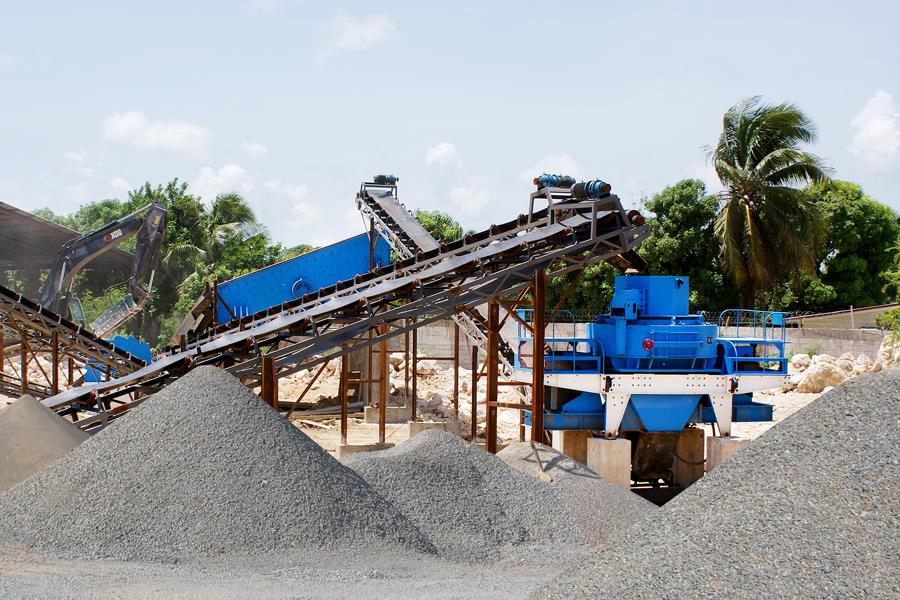
What equipment is used for secondary crushing in sand and gravel production lines
Those familiar with aggregate production lines will understand that to achieve more rational gradation and superior particle shape, most operations employ secondary crushing after primary crushing. Consequently, selecting the appropriate secondary crushing equipment is crucial. So, what equipment is best suited for secondary crushing in aggregate production lines?
1. Impact Crusher
The impact crusher is a commonly employed secondary crushing solution in aggregate production lines. It primarily processes soft materials with compressive strengths not exceeding 350 MPa, accepting feed sizes up to 500 millimetres. Output particle size is regulated by adjusting the gap between the impact frame and rotor, typically yielding products below 60 millimetres. Available in numerous models with varying throughput capacities ranging from 30 to 800 tonnes per hour, selection can be tailored to specific operational requirements.
Operating on an impact crushing principle, the impact crusher relies primarily on kinetic energy to break materials. Consequently, the blow bars and impact liners are subject to significant wear and require frequent replacement, particularly when processing harder materials. The finished product from an impact crusher exhibits excellent particle shape, typically cubic, and possesses a degree of aggregate shaping capability, potentially eliminating the need for a separate sand-making stage.
2. Cone Crusher
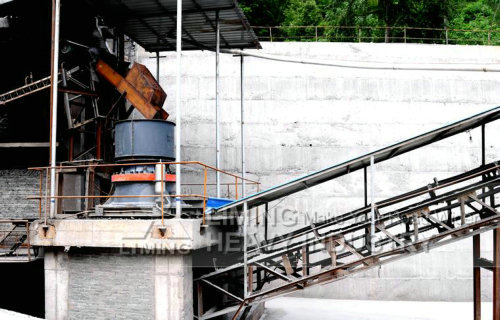
The cone crusher is another common secondary crushing equipment for stone processing. However, it is better suited for crushing harder materials. It primarily relies on the gyratory motion of the crushing cone within the shell cavity to exert squeezing, splitting, and bending forces on the material, thereby completing the crushing operation.
Cone crushers offer a high crushing ratio, high efficiency, low equipment failure rate, and minimal over-crushing of the product. However, the finished product particle shape is not optimal. For applications requiring superior particle shape, a sand-making machine should be installed downstream.
How to select equipment for the secondary crushing stage in a sand and gravel production line?
Both impact crushers and cone crushers are commonly used secondary crushing equipment in stone quarries, each possessing distinct advantages and limitations. It is not a matter of one being inherently superior, but rather which is more suitable for your specific sand and gravel production line.
For crushing softer materials such as limestone or dolomite, the impact crusher is recommended. For harder materials like granite, basalt, or tuff, the cone crusher is advised.
For applications demanding superior finished particle shape, the impact crusher is preferable, as it provides effective material shaping.
Newcomers to the industry or small-to-medium-sized quarries may find the impact crusher advantageous due to its simpler structure, easier maintenance, and comparatively lower cost. For large-scale quarries, cone crushers are recommended. Although initially more expensive, they offer extended equipment lifespan, eliminating the hassle of frequent wear part replacements. Crucially, cone crushers deliver high throughput, making them the optimal choice for secondary crushing in large and medium-sized quarries.
In summary, when selecting secondary crushing equipment for aggregate production lines, one must consider not only feed characteristics and equipment cost but also align the capacity with the primary crushing stage. Front-to-back throughput must be appropriately matched.
Should you require equipment for sand and gravel production lines, please click to consult our website customer service for complimentary advice and further details.
-
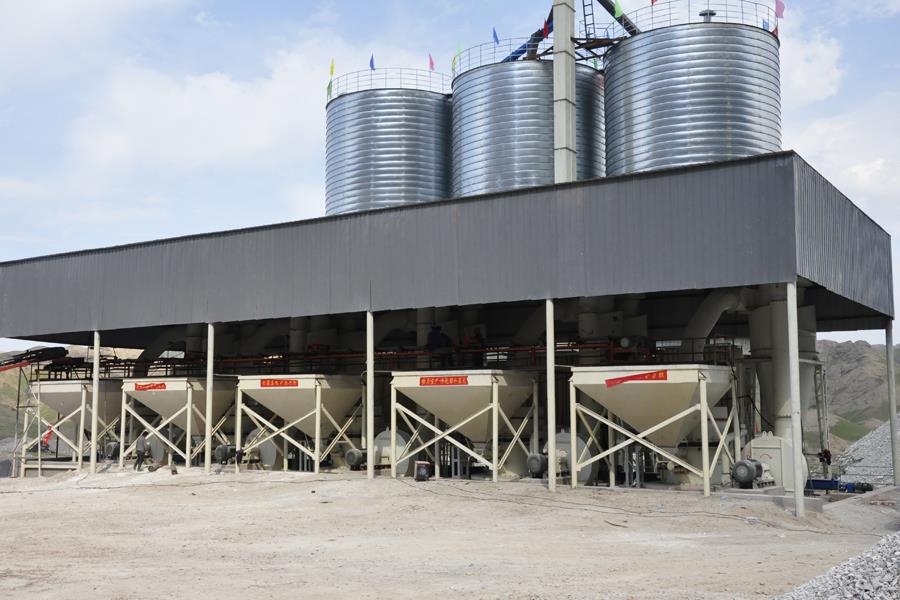
What equipment is required to establish a quartz stone sand production line
-
-
-
-
Introduction to Aggregate Processing Crushing Equipment Combinations