
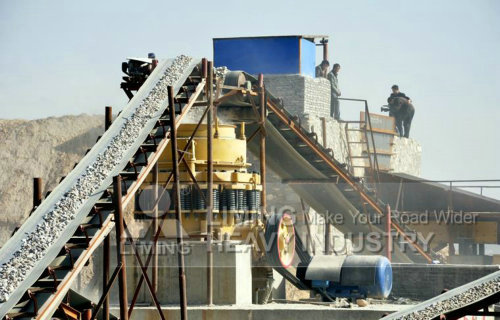
What are the differences between impact crushers and jaw crushers
Jaw crushers and impact crushers have continuously evolved in the crushing industry, becoming indispensable equipment on the crushing front lines. Primary crushing at the beginning of the production line is the core of the entire crushing process, while the subsequent secondary and tertiary crushing operations serve as crucial supporting equipment for finished material production. So, within the entire production process, what distinguishes the jaw crusher used for coarse crushing from the impact crusher used for secondary crushing? Below, OCP Heavy Industry takes you through the crushing knowledge of these two types of crushers.
1. Installation Sequence of Crushers
Jaw crushers are typically employed for primary crushing, reducing large materials to sizes suitable for secondary crushers like cone crushers, impact crushers, or gyratory crushers. Secondary crushers generally handle smaller feed sizes. If feed material is exceptionally large, a jaw crusher must serve as the initial crushing stage. Impact crushers are commonly used for materials like marble and granite. However, excessively hard materials are unsuitable for impact crushers, as they cause significant wear on vulnerable components.
2. Crushing Performance of Impact Crushers vs. Jaw Crushers:
Impact crushers, also known as impact breakers, produce cubic-shaped, stress-free, crack-free particles with excellent shape. They can crush coarse, medium, and fine materials (granite, limestone, concrete, etc.) with compressive strength not exceeding 500 MPa. Their discharge size is adjustable, and crushing specifications are diverse.
Jaw crushers are primarily used for medium crushing of various ores and bulk materials with compressive strengths not exceeding 320 MPa. They are categorized into primary and secondary crushing types. This series offers comprehensive specifications, with feed sizes ranging from 125 mm to 750 mm, making it a preferred choice for crushing equipment.
3. Crushing Principles of Impact Crushers and Jaw Crushers
During operation, the impact crusher's rotor spins at high speed driven by an electric motor. Materials enter the impact plate zone, where they collide with the rotor before being thrown back into the crushing chamber for further fragmentation. Materials undergo repeated crushing cycles—first, second, and third—within the impact chamber until reduced to the desired size and discharged through the outlet.
When a jaw crusher operates, the motor drives the belt and pulley, causing the movable jaw to move up and down via the eccentric shaft. As the movable jaw rises, the angle between the toggle plate and the movable jaw increases, bringing the movable jaw plate closer to the fixed jaw plate. Simultaneously, the material is crushed or sheared to achieve the crushing objective. When the movable jaw descends, the angle between the toggle plate and the movable jaw decreases. Under the action of the tie rod and spring, the movable jaw plate moves away from the fixed jaw plate, allowing the crushed material to discharge from the lower opening of the crushing chamber. Continuous motor rotation enables batch production.
4. Application Characteristics of Impact Crushers
Impact crushers feature large feed openings, spacious crushing chambers, high material hardness tolerance, large particle size capacity, and minimal stone powder generation. The gap between the impact plate and hammer plate can be easily adjusted to effectively control particle size with excellent shape retention. Their compact structure ensures strong mechanical rigidity, while the rotor's high rotational inertia, combined with high-chromium hammer plates, delivers superior impact resistance, wear resistance, and powerful crushing force. Maintenance is straightforward, making them economical and reliable. They offer comprehensive crushing capabilities, high productivity, minimal mechanical wear, and excellent overall efficiency.
5. Crushing Advantages of Impact Crushers vs. Jaw Crushers
Due to inherent crushing limitations, jaw crushers produce uniformly sized but relatively coarse mineral particles. Therefore, users requiring higher product quality must consider auxiliary secondary crushers when purchasing equipment. The difference lies in the impact crusher, which not only possesses high compressive strength but also achieves stone shaping effects. Consequently, the processed ore exhibits strong cubic characteristics and rational gradation, fully meeting current stone production requirements. Thus, many stone production lines routinely combine both types.
Generally, jaw crushers are primarily used for primary crushing of relatively large stone materials, while impact crushers are mainly employed for secondary crushing of medium-sized stones. Both operate on the principle of impact fragmentation, with the degree of crushing depending on the structure and working mechanism of each type. Impact crushers achieve fragmentation through the rotational collision between the rotor and impact plates. Jaw crushers, categorized into single-toggle and double-toggle types, crush materials by driving the movable jaw plate and fixed jaw plate to perform reciprocating squeezing motions. Simply put, the former breaks material through circular swinging motion, while the latter breaks it through linear squeezing motion. Compared to jaw crushers, the impact crusher operates continuously. Materials within its chamber are subjected to bending, shearing, and frictional forces, facilitating easier fragmentation. Consequently, impact crushers offer higher production capacity and lower energy consumption.
(Technical specifications and other data mentioned in this document are subject to change with product upgrades. Click here to contact our website customer service for the latest equipment specifications.)
OCP specializes in the development and production of complete sets of equipment for crushing, screening, grinding, washing, feeding, conveying, environmental protection, dust removal, as well as steel, metallurgy, and steel slag processing and recycling. Our products are widely used in the crushing and processing of metals, non-metallic minerals, energy raw materials, and metallurgical waste residues within the steel and metallurgical sectors. Click to contact our website customer service for a free consultation anytime—available 24/7.
-
-
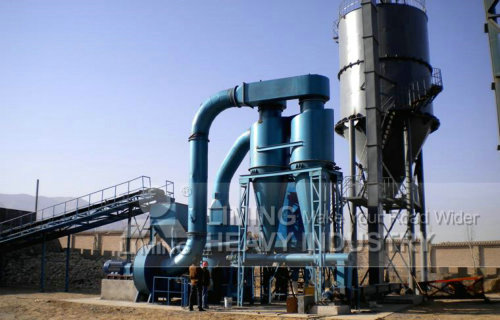
How Can China is Mining Machinery Equipment Rise in the International Market
-
-
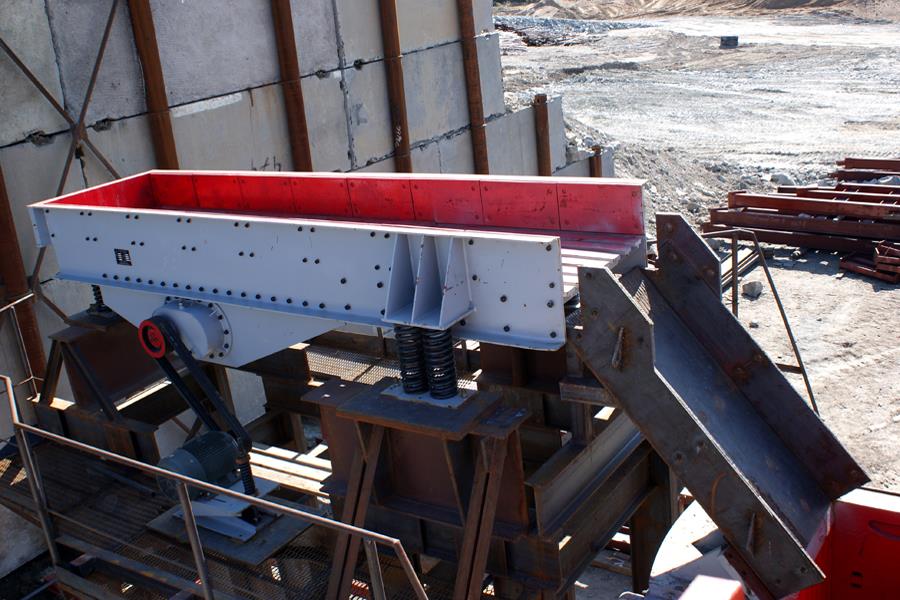
How much does it cost to build a sand production line? What are the main cost components?
-
Differentiated Comparison Between Tire-Mounted and Track-Mounted Cone Mobile Crushing Plants