The Crushing Stage in Aggregate Production Systems
Aggregates constitute the fundamental components of concrete, with approximately 1.5 cubic metres of aggregate required per cubic metre of concrete. Artificial aggregates offer superior gradation and quality, finding extensive application in infrastructure development. The artificial aggregate processing system primarily comprises the following stages: raw material extraction and transportation, primary crushing, secondary and tertiary crushing, sand making, screening, and washing. This article focuses on the crushing stage:
Crushing constitutes the most critical phase in manufactured sand and aggregate production. The principles of crushing involve various forces or combinations thereof, including compression (lamination), torsion (shearing), impact (blow, collision), and abrasion. The selection of crushing processes, along with the specification and configuration of crushing equipment, plays a decisive role in the success of manufactured sand and aggregate systems. A three-stage crushing process—primary, secondary, and tertiary crushing—is employed. Depending on equipment performance and aggregate requirements, certain crushing stages may operate in closed-circuit processing to adjust the gradation of sand and gravel materials.
(1) Primary Crushing
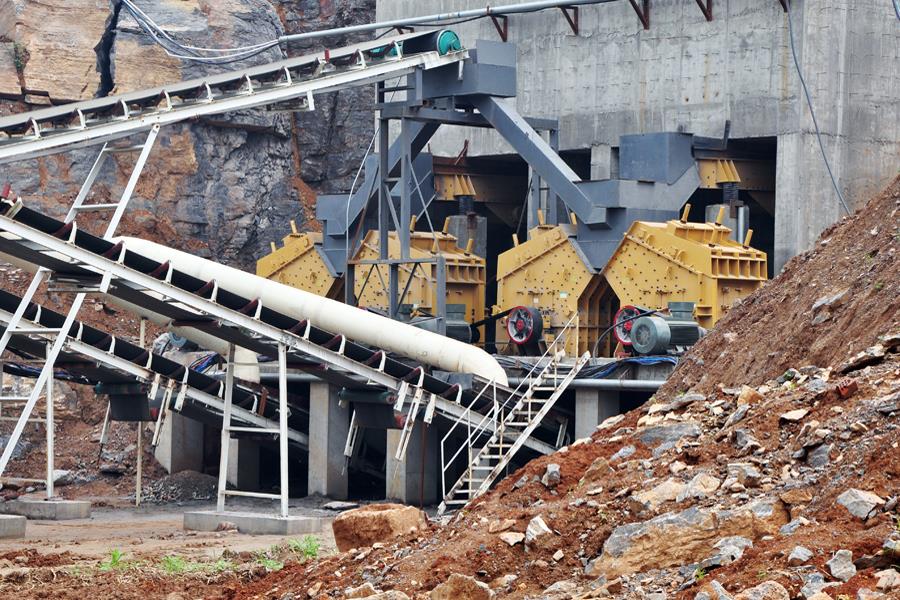
Primary crushing processes raw material extracted from quarries. Equipment widely used for primary crushing includes gyratory crushers and jaw crushers.
The advantages of gyratory crushers include suitability for various rock types, operation without vibrating feeders, high processing capacity, tolerance for large feed sizes, uniform particle size distribution with favourable particle shape, and stable, reliable operation. Disadvantages encompass substantial civil engineering requirements, tall and heavy structures, complex equipment design, intricate maintenance procedures with extended downtime cycles, often necessitating crane assistance for servicing, and significant overall investment.
Advantages of jaw crushers include simple structure, compact dimensions, reliable operation, convenient discharge adjustment, ease of maintenance, and minimal civil engineering requirements. Jaw crushers typically operate with vibrating feeders for screened feeding to prevent over-crushing, though they are prone to material jamming, exhibit lower production stability and reliability, have smaller processing capacities, and produce inferior particle shapes.
(2) Medium and Fine Crushing
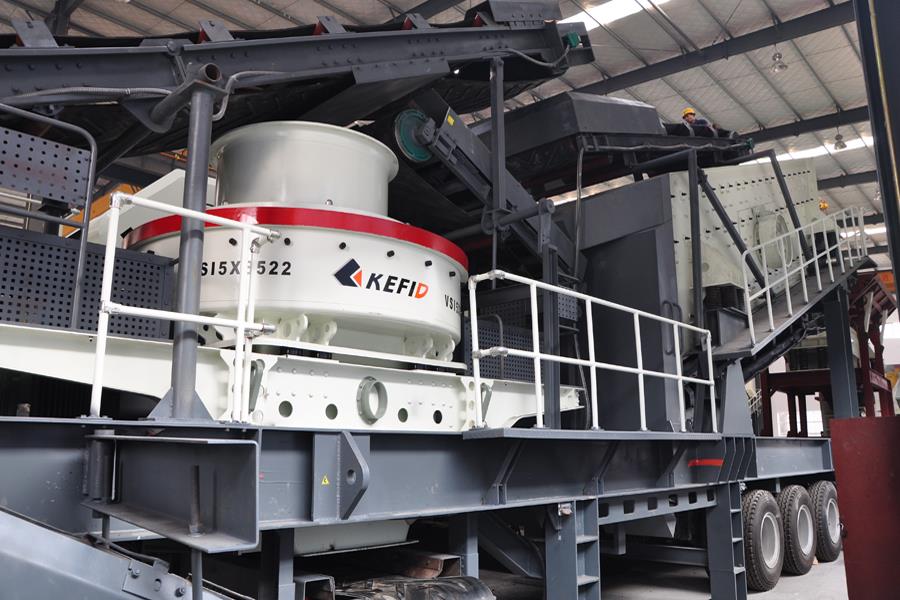
Medium and fine crushing equipment commonly employs impact crushers and cone crushers, with jaw crushers occasionally used for producing sand-making raw materials. Cone crushers are categorised by operating principle into eccentric and inertia types, with the former being more widely applied. Based on hydraulic cylinder configuration, they are further classified into single-cylinder and multi-cylinder cone crushers, the latter being more prevalent. Cone crushers offer high throughput capacity, large crushing ratios, and uniform product gradation, making them suitable for hard rock applications. However, they feature large dimensions, substantial weight, high liner consumption, and elevated equipment costs.
Generally, crushing processes adopt the following configurations: a. Open-circuit coarse and medium crushing; b. Open-circuit coarse and medium crushing with closed-circuit fine crushing; c. Open-circuit coarse crushing with closed-circuit medium and fine crushing.
The first configuration's advantages include absence of recirculating load, reduced civil engineering requirements, and fewer equipment configurations, though production control proves challenging.
The second process offers light circulating load but features complex system layout and challenging production control.
The third process provides straightforward production control, with coordinated medium and fine crushing meeting aggregate gradation requirements across construction phases. It offers flexible system configuration but entails substantial civil works, relatively extensive equipment, material reprocessing via screening and crushing, and high circulating load.
(3) Manufactured Sand Processing
Common manufactured sand processing equipment includes impact crushers and rod mills. Engineering applications also utilise ultra-fine crushing cone crushers, such as the HST series single-cylinder cone crushers and multi-cylinder cone crushers. Rod mills are most frequently employed due to their simple structure, ease of operation, and reliable performance, though they feature bulky bodies and substantial weight. Impact crushers are compact and lightweight. Based on chamber design, they are typically categorised as stone-on-stone or stone-on-iron types. Stone-on-stone crushers are commonly used for hard rock sand production, while stone-on-iron crushers are favoured for soft rock sand production. The stone-on-iron configuration yields a higher powder production rate than the stone-on-stone chamber (Still unclear about the difference between ‘stone-on-stone’ and ‘stone-on-iron’ sand makers? Choosing the wrong crushing method directly impacts production!).
Common sand-making processes include: a. Combined impact crusher and rod mill sand production; b. Standalone rod mill sand production; c. Direct impact crusher sand production without material classification; d. Impact crusher sand production with material classification.
OCP Heavy Industry, with 40 years of experience in manufacturing and developing large-scale mining equipment, offers core machinery including jaw crushers, impact crushers, cone crushers, sand makers, washing and sorting equipment, and conveying systems. We tailor production line solutions to client requirements, providing complimentary installation and training. Site visits to our facilities are welcome! Click our website chat for immediate free consultation – available 24 hours.
-
Design Considerations for Quarrying Operations in Aggregate Production Systems
-
What is the total cost for a complete pebble sand production line
-
Intermediate Storage Bin and Finished Product Yard of a High-Quality Aggregate Production Line
-
A high-quality washing unit for a sand and gravel production line
-