
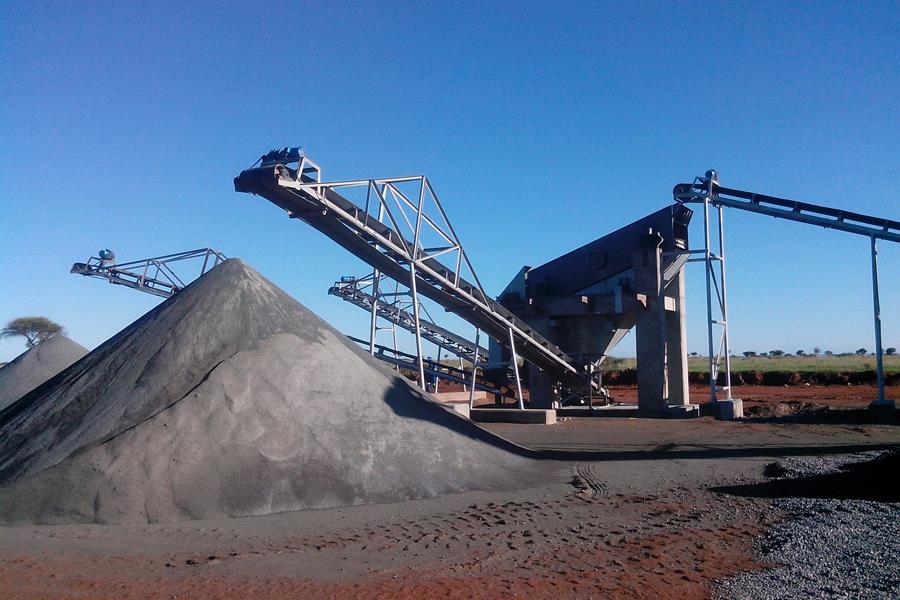
Purchase a secondary cone crusher for ankerite 45 tph in South Africa
For ankerite (iron‑rich dolomite) processing in South Africa – found in the Northern Cape, Mpumalanga, and parts of the Limpopo region – a 45 tph secondary cone crusher is a key asset for producing consistent aggregate or feed for industrial applications such as cement, refractory, or iron ore sintering. Ankerite is moderately hard (Mohs 3.5‑4) and can be abrasive when associated with quartz or chert. Selecting the right cone crusher for secondary crushing ensures efficient reduction from primary jaw product to a well‑shaped, sized material. When you purchase a secondary cone crusher for ankerite 45 tph in South Africa, OCP Mechanical Company supplies factory‑direct Type C crushers designed for African hard rock conditions, backed by 24/7 online support.
Note: Product data are constantly updated; the latest specifications should be confirmed with our online customer service.
Why a standard cavity cone crusher is a practical choice for ankerite
Ankerite is often crushed in two stages: primary jaw followed by secondary cone. For 45 tph, a Type C-45 standard cavity cone crusher with a 75‑90 kW motor is a widely used configuration. At a CSS of 12‑20 mm, it can accept feed up to 80‑120 mm from the jaw crusher and produce 40‑55 tph of 15‑30 mm product – ideal for further grinding or direct use as flux material. The standard cavity has a wider feed opening and shorter parallel zone, allowing coarser feed and higher throughput. Many South African ankerite operations have successfully used this crusher size, reporting stable performance and acceptable liner wear.
Key features that lower your cost per ton of ankerite
When you purchase a secondary cone crusher for ankerite 45 tph in South Africa, focus on features that directly reduce operating expenses:
Hydraulic CSS adjustment – Allows operators to compensate for liner wear in minutes without stopping the crusher, maintaining product size and reducing downtime.
Mn18%+Cr liners – For ankerite with quartz or chert inclusions, Mn18%+Cr offers 30‑50% longer wear life than standard Mn14% (typically 1,200‑1,800 hours).
Optional VFD – Saves 8‑12% on electricity by optimizing eccentric speed for different feed hardness.
Dust seal with air purge – Protects bearings from fine ankerite dust, which can be abrasive.
Heavy‑duty main frame and bearings – Designed for continuous operation in dusty quarry environments.
All price information in this article is for reference only; contact our team for a current, site‑specific quote.
Compared to other suppliers, OCP’s factory‑direct model saves 15‑20% on both the crusher and genuine wear parts, with predictable annual maintenance costs.
Price range and delivery to South Africa
A Type C-45 standard cavity cone crusher with hydraulic CSS adjustment and Mn18%+Cr liners ex‑works typically ranges from $45,000 to $70,000 USD. Manual thread adjustment (without hydraulics) reduces the price by $5,000‑$8,000. A VFD adds $3,000‑$5,000. Shipping to South African ports (Durban, Cape Town) (CIF) adds $6,000‑$12,000. A starter set of liners, dust seals, and hydraulic filters adds $2,500‑$4,000. Total landed cost is approximately $55,000‑$90,000 USD.
Many South African ankerite producers have recovered the crusher investment within 12‑24 months through improved product consistency and reduced recirculation.
How to select the right cone crusher for your ankerite operation
To purchase a secondary cone crusher for ankerite 45 tph in South Africa, provide OCP’s engineers with your feed size (e.g., 50‑100 mm), desired product size (15‑25 mm), and ankerite hardness. For ankerite with low quartz content, Mn14% liners may be cost‑effective. For harder ore, Mn18%+Cr is strongly recommended. Consider hydraulic CSS if you frequently change product sizes. OCP offers a free throughput simulation and a detailed quotation with line drawings. For remote sites, order a spare set of liners with the initial purchase – shipping lead times can be 4‑6 weeks. We also provide remote commissioning and operator training via video call.
Operational tips for ankerite crushing in South Africa
Ankerite can be dusty. Install a dust suppression system (water sprays) at the crusher feed and discharge. Use a vibrating screen ahead of the cone crusher to remove fines below 6‑8 mm; this reduces liner wear and increases net throughput. Maintain a choke‑fed condition to ensure even liner wear. Check CSS weekly using lead balls. Rotate the bowl liner (if reversible) every 500‑600 hours to extend life. Keep a spare set of liners, dust seals, and hydraulic filters on site. For sites in the Northern Cape’s hot climate, ensure the hydraulic oil cooler is clean and the oil viscosity is appropriate (ISO VG 150 or 220).
Why OCP is your trusted cone crusher supplier for ankerite in South Africa
Understanding how to purchase a secondary cone crusher for ankerite 45 tph in South Africa is only the first step – you also need a partner who backs you with local support and technical advice. OCP Mechanical Company has four decades of experience in crushing equipment for the South African mining and aggregate industry. Our 24/7 online team helps with CSS tuning, liner selection, and troubleshooting. We keep common cone liners and wear parts in our Johannesburg warehouse for fast delivery. We invite you to request a no‑obligation quote and experience factory‑direct pricing.
For a no‑obligation purchase a secondary cone crusher for ankerite 45 tph in South Africa, simply click the live chat icon on this page. Our online customer service team is available 24 hours a day, 7 days a week, to provide free price quotes, equipment recommendations, and installation advice – helping you crush ankerite more efficiently and profitably.
-
Price of sand making machine for strontianite 135 tph in Spain
-
Tips to increase cone crusher throughput for willemite 70 tph in Namibia
-
Where to buy a used impact crusher for hemimorphite 75 tph in Mexico
-
How to select a vibrating screen deck for wet pyrochlore 100 tph in Brazil
-
Quote for screw sand washer for fergusonite 45 tph in Nigeria