
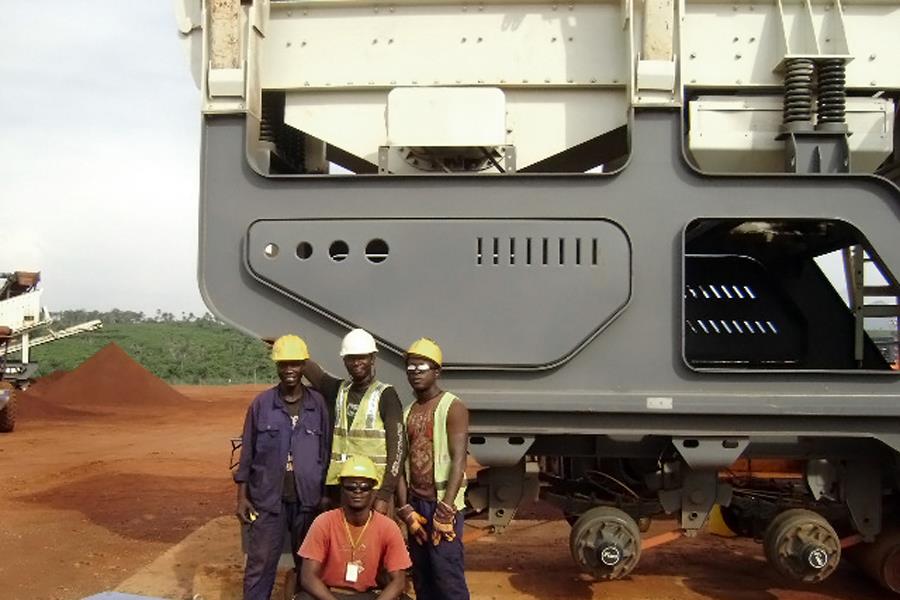
How to select a cone crusher cavity for fine crushing of fluorspar 70 tph
Why selecting the right cone crusher cavity for fine crushing of fluorspar 70 tph is critical for your operation
Mexico holds a commanding position in the global fluorspar industry. The country is currently the world's second‑largest producer of fluorite, behind only China, which accounts for more than half of global supply. In 2024, global fluorite production reached 9.5 million tonnes, of which Mexico contributed 1.51 million tonnes – a record high for the country. San Luis Potosí is the undisputed national leader, producing 45,812 tonnes of fluorite in May 2026 alone, representing an annual increase of 1.4 per cent. The state accounts for approximately 93‑94 per cent of national fluorite production, with the Las Cuevas mine near Zaragoza being one of the world's largest and most productive fluorspar sources. For operators processing this critical mineral, achieving the right particle size for downstream beneficiation is essential. Understanding how to select a cone crusher cavity for fine crushing of fluorspar 70 tph is therefore a strategic decision that directly affects product quality, operating costs, and plant efficiency. At OCP Mechanical Company, with over 40 years of manufacturing expertise, we offer factory‑direct cone crushers with customisable cavity configurations, providing transparent pricing and engineered solutions for the Mexican market.
Understanding fluorspar and its fine crushing requirements at 70 tph
Fluorspar (calcium fluoride) has a Mohs hardness of 4, making it a relatively soft mineral, yet it is brittle and can produce excessive fines if not crushed carefully. For a 70 TPH fine crushing application, the feed typically comes from a primary jaw crusher, with particle sizes ranging from 20‑50 mm down to a final product of 0‑15 mm or finer, suitable for flotation feed or direct sale. The selection of the cone crusher cavity directly influences the reduction ratio, particle shape, and fines generation. When you are determining how to select a cone crusher cavity for fine crushing of fluorspar 70 tph, you must consider the feed size distribution, the desired product gradation, and the abrasiveness of the ore. Fluorspar is generally non‑abrasive compared to harder rocks, which means liner wear is moderate. However, the presence of silica or other impurities in some Mexican deposits – particularly in the San Luis Potosí region – can increase abrasiveness and affect cavity selection. Our Type C cone crusher is available with multiple cavity options, including standard, medium, and fine profiles, each designed for specific feed and product requirements. All product specifications, including capacity and cavity dimensions, are continuously updated; for the latest parameters, please consult our online customer service. By matching the cavity to your specific fluorspar feed, you can achieve optimal throughput and product quality.
Key factors in selecting a cone crusher cavity for fine crushing
When you evaluate how to select a cone crusher cavity for fine crushing of fluorspar 70 tph, several critical factors must be considered. The first is feed size. Each cavity configuration has a maximum feed opening that it can accept. For fine crushing, the feed should typically be no larger than 50‑60 mm; if your primary crusher produces coarser material, you may need a medium cavity first. The second factor is the closed side setting (CSS) – the minimum distance between the mantle and concave at the discharge point. A finer CSS produces a finer product but reduces capacity and increases power draw. For fluorspar at 70 TPH, a CSS of 8‑15 mm is common for fine crushing applications. The third factor is the cavity profile – whether it is a standard short‑head or a fine cavity. Short‑head liners are typically used in tertiary or quaternary stages for fine crushing, offering a parallel zone that ensures better product shape and controlled fines. The fourth factor is the feed grading. A well‑graded feed with consistent size distribution ensures stable crushing performance and maximises liner life. Finally, the eccentric throw and stroke affect the crushing action; a longer stroke provides higher reduction but may increase wear. Our engineering team can analyse your fluorspar feed characteristics and recommend the optimal cavity configuration to achieve your 70 TPH target with consistent product quality.
Cavity options for fluorspar fine crushing – which one is right for you?
When considering how to select a cone crusher cavity for fine crushing of fluorspar 70 tph, it is helpful to understand the standard cavity options available. For cone crushers, the cavity is primarily determined by the concave (outer liner) selection. Manufacturers typically offer between four and eight different standard concaves per crusher model, each with a specific application area. For fine crushing of fluorspar, a fine cavity (sometimes designated as "short‑head fine") is generally preferred. This cavity features a longer parallel zone and a steeper crushing chamber, which provides a more controlled reduction and produces a well‑shaped product with minimal fines. Alternatively, a medium fine cavity may be suitable if your feed contains a higher proportion of oversize material or if you require a slightly coarser product. A standard cavity is typically used for secondary crushing and is not recommended for fine fluorspar applications where a tight product specification is required. Our Type C cone crusher offers a range of cavity options, including fine, medium fine, and extra fine, allowing you to select the profile that best matches your feed and product requirements. We also offer customised liner profiles for specific fluorspar deposits, optimised for the abrasiveness and brittleness of the ore. All product data, including cavity dimensions and capacity figures, are continuously updated; for the latest parameters, please consult our online customer service. When you select the right cavity, you achieve better product shape, longer liner life, and more consistent 70 TPH output.
How fluorspar properties influence cavity selection in Mexican operations
Mexican fluorspar deposits, particularly those in San Luis Potosí, can vary in purity and mineralogy. The Las Cuevas mine, for example, produces ore that is blended with material purchased from small miners, resulting in varying feed characteristics. Some deposits contain higher levels of calcium carbonate or silica, which affect both the crushing behaviour and the wear on liners. When you are determining how to select a cone crusher cavity for fine crushing of fluorspar 70 tph, you must consider the specific properties of your ore. For purer fluorspar with low impurities, a fine cavity with a tighter CSS can be used to achieve a finer product with minimal wear. For ores with higher silica content, a slightly more open CSS and a medium cavity may be preferred to reduce the risk of liner damage and excessive fines. In addition, the moisture content of the feed can influence cavity selection; moist fluorspar may cause packing in a tight cavity, reducing throughput. Our Type C crusher features a hydraulic adjustment system that allows you to change the CSS remotely and quickly, enabling you to adapt to variations in feed without stopping production. We also offer wear‑resistant liner materials, such as high‑manganese and alloyed steels, to extend service life in more abrasive applications. By tailoring the cavity and operating parameters to your specific fluorspar, you can optimise both quality and output.
Mexican operating conditions – climate, altitude, and site logistics
Mexico's mining regions vary in altitude, with San Luis Potosí sitting at approximately 1,800 metres above sea level. Higher altitudes reduce motor efficiency, so when selecting a cone crusher, you may need to derate the motor power accordingly. Our Type C crusher is available with motors sized for high‑altitude operation, ensuring you achieve the full 70 TPH capacity. The climate in central Mexico is temperate, with hot summers and mild winters, but some areas experience high humidity during the rainy season, which can affect electrical components and lubrication. We offer tropicalised electrical enclosures and heavy‑duty cooling systems as options. Logistics are also a consideration; many fluorspar mines are located in remote areas with limited road access. Our crushers are designed for modular transport and can be assembled on site with minimal heavy lifting. We coordinate with local freight forwarders and provide all necessary documentation for customs clearance. When you evaluate how to select a cone crusher cavity for fine crushing of fluorspar 70 tph, it is important to choose a supplier who understands these local conditions and can deliver equipment that performs reliably in the Mexican environment.
Cost and performance trade‑offs in cavity selection
The choice of cavity affects both the initial cost of the liners and the long‑term operating costs. Fine cavities typically have more complex geometries and may require more frequent liner replacement if the feed is abrasive, but they produce a higher‑value product. Medium cavities may offer longer liner life at the expense of product fineness. When you are deciding how to select a cone crusher cavity for fine crushing of fluorspar 70 tph, it is useful to perform a cost‑benefit analysis. We can provide a projected liner wear curve for each cavity type based on your feed characteristics, helping you estimate the cost per tonne of crushed product. In many fluorspar operations, the increased recovery from a finer product more than offsets the additional liner cost. Our Type C crusher is designed for quick liner changes, reducing downtime when you need to switch between cavities or replace worn parts. We also offer a liner exchange program where you return worn liners for recycling, providing a credit toward future purchases. All pricing information is for reference only; final costs depend on your specific configuration and current material prices. By making an informed cavity selection, you can achieve the optimal balance of product quality, throughput, and operating cost.
Sample parameter table for Type C cone crusher cavities (For reference only)
The table below provides indicative specifications for the cavity options available on our Type C cone crusher, suitable for 70 TPH fluorspar fine crushing. Actual values depend on feed size, moisture, and required product; please request the latest data from our customer service, as all parameters are continuously updated.
| Cavity Type | Max Feed Size (mm) | CSS Range (mm) | Typical Capacity (TPH) | Recommended Application |
|---|---|---|---|---|
| Fine | 50 | 6‑12 | 65‑80 | Final product <10mm, high‑grade fluorspar |
| Medium Fine | 60 | 10‑16 | 70‑85 | Product 10‑15mm, moderate impurities |
| Medium | 75 | 14‑20 | 75‑90 | Coarser product, higher silica content |
This table is for illustrative purposes only. For precise engineering data and process guarantees, please consult our technical team with your specific fluorspar sample.
Why OCP Mechanical is your trusted partner for cone crusher solutions in Mexico
With over 40 years of manufacturing experience, OCP Mechanical combines engineering excellence with a customer‑first approach. We are a factory‑direct supplier, meaning you avoid the markups charged by dealers and importers. Our Type C cone crusher is built with high‑quality components and rigorously tested before shipment. We can customise the cavity profile, liner material, and automation level to match your specific fluorspar feed and product requirements. Our logistics team has extensive experience shipping to Mexico, and we provide all necessary documentation for customs clearance. Our after‑sales support includes a 12‑month warranty, remote technical assistance, and a comprehensive spare parts supply chain. We also offer on‑site training for your operators and maintenance staff. When you seek guidance on how to select a cone crusher cavity for fine crushing of fluorspar 70 tph, we provide expert advice and data‑driven recommendations to help you make the right choice.
Conclusion – Choose the right cavity and optimise your fluorspar production today
Selecting the correct cone crusher cavity is a vital step in achieving efficient fine crushing of fluorspar. By understanding the properties of your ore, the available cavity options, and the operating conditions in Mexico, you can make a decision that boosts product quality, reduces operating costs, and maintains steady 70 TPH output. OCP Mechanical offers the equipment, expertise, and factory‑direct pricing you need to succeed. Our online customer service team is available 24/7 to help you with how to select a cone crusher cavity for fine crushing of fluorspar 70 tph and provide a detailed, no‑obligation quote. Click the chat button now – let us help you build a more profitable fluorspar processing operation in Mexico.
-
Factory Direct Price of Impact Crusher for Dolomite 195 TPH in Vietnam
-
-
-
-
Price of Sand Screw Washer for Sea Sand 60 TPH in Bangladesh



