
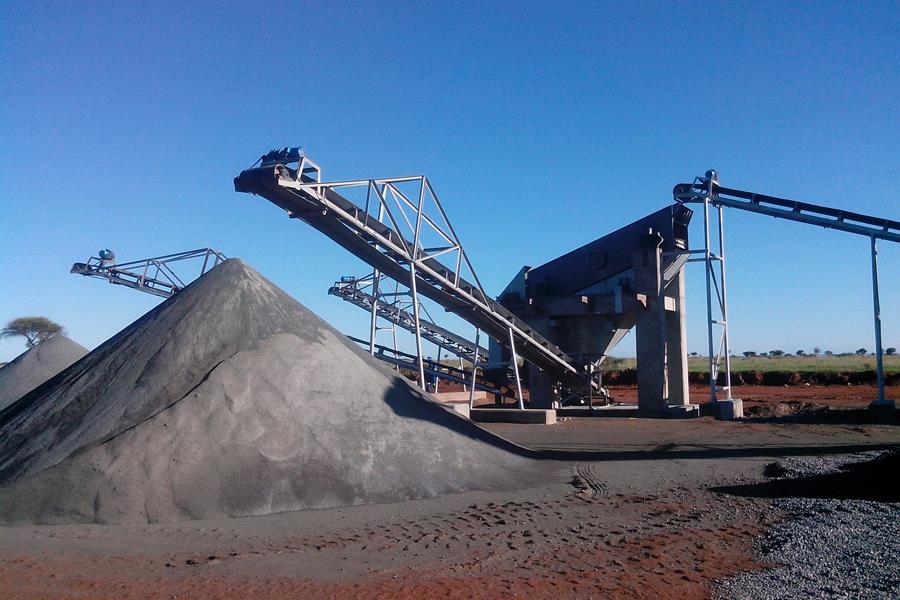
How to Reduce Water Usage in Sand Screw Washer with Hydrocyclone 120 TPH
Saudi Arabia‘s Water Scarcity: Why Every Drop Counts in Sand Processing
Saudi Arabia operates in one of the most water-stressed environments on the planet, and the industrial sector is under mounting pressure to reduce freshwater consumption. The Kingdom has set ambitious targets to expand treated wastewater reuse from 17% in 2019 to 30% in 2026, with industrial consumption projected to exceed 100 million cubic metres annually by 2030. New water efficiency regulations introduced in 2026 impose fines of up to SR200,000 for violations, and companies are now required to meter and report water consumption accurately. For sand and aggregate producers in Riyadh and across the Kingdom, these regulatory and environmental realities make water conservation not merely a cost-saving measure but a compliance necessity. A 120 TPH sand screw washer operating without a water recycling system can consume 150–200 tonnes of water per hour—an unsustainable figure in a country where every cubic metre of freshwater carries economic and regulatory weight.
The Hidden Water Cost of Screw Washers: Overflow and Fines Loss
Traditional spiral sand washers rely on a large volume of water to wash and classify material. The screw rotates slowly in a water-filled trough, allowing silt and clay to overflow at the lower weir while clean sand is conveyed upward and discharged. The fundamental inefficiency of this design is that the overflow stream carries not only silt and clay but also valuable fine sand—typically in the 0.075–0.6 mm range. In a 120 TPH operation, this loss can amount to 10–15 tonnes per hour of saleable product, while simultaneously requiring a continuous supply of fresh water to maintain the washing action. The water that overflows the weir is laden with fines and cannot be reused without treatment. This “linear” water consumption model—fresh water in, wastewater out—is precisely what Saudi regulators are targeting, and it is the primary reason why integrating a hydrocyclone into the sand washing circuit has become standard practice in the region.
How Hydrocyclones Recover Fines and Enable Water Recycling
A hydrocyclone transforms the screw washer from a water-wasting device into a closed-loop processing system. The overflow slurry from the screw washer is pumped into the hydrocyclone under pressure. Inside the cone-shaped vessel, centrifugal force separates the slurry into two streams: a coarse underflow containing the recovered fine sand, and a fine overflow containing silt, clay, and the bulk of the process water. The underflow is discharged onto a dewatering screen, where the recovered sand is further dewatered to a moisture content of 10–15% and discharged as a drip-free product. Critically, the clarified overflow water from the hydrocyclone is directed to a settling pond or thickener, where suspended solids settle out and the clarified water is returned to the screw washer‘s water supply. This closed-loop water management system can recycle up to 90% of process water, reducing freshwater consumption to only the volume lost through product moisture and evaporation.
Optimising the Hydrocyclone and Screw Washer Combination for 120 TPH
For a 120 TPH sand washing operation in Saudi Arabia, the hydrocyclone and screw washer must be sized and configured to work as an integrated system. The screw washer‘s primary role becomes initial washing and coarse dewatering, while the hydrocyclone handles fine sand recovery and water clarification. The feed slurry from the screw overflow—typically containing 5–10% solids—is pumped to the hydrocyclone at a pressure of 0.1–0.3 MPa. The hydrocyclone‘s apex and vortex finder diameters are selected to achieve the desired silt cut point, typically 75 microns for concrete sand applications. The dewatering screen beneath the hydrocyclone must be sized to handle the recovered underflow volume—for a 120 TPH feed, a screen with 1.8–2.4 m width is generally appropriate. The water recovery rate depends on the efficiency of the settling circuit; a well-designed thickener or lamella clarifier can return 85–90% of the overflow water to the screw washer, reducing freshwater make-up to 10–20 tonnes per hour for a 120 TPH operation.
Practical Water-Saving Measures Beyond Equipment Selection
Equipment configuration alone does not guarantee minimal water usage. Operational discipline is equally important. Feed rate control is critical: overloading the screw washer forces the operator to increase water flow to maintain product cleanliness, while underfeeding wastes water on empty capacity. A variable-frequency drive on the feed conveyor allows precise control of the solids feed rate to match the washer‘s optimal processing window. Spray nozzle maintenance on the dewatering screen and any rinse bars must be inspected weekly; clogged or worn nozzles waste water and reduce washing efficiency. Settling pond management—including regular desludging and weir level checks—ensures that clarified water quality remains suitable for recirculation. Finally, operator training on water balance monitoring enables early detection of leaks, blockages, or inefficiencies before they escalate into compliance issues. All price information provided is for reference only; final quotes depend on equipment configuration, shipping terms, optional features, and current exchange rates.
Why OCP Mechanical Company Is Your Water-Efficient Partner in Saudi Arabia
With over 40 years of manufacturing experience and exports to more than 180 countries and regions worldwide, OCP Mechanical Company supplies spiral sand washers, hydrocyclones, dewatering screens, and complete sand washing and water recycling plants engineered for the demanding conditions of Saudi Arabia. Our systems are designed for closed-loop operation, with integrated water management that minimises freshwater consumption while maximising fine sand recovery. We understand the Kingdom‘s regulatory environment and can configure your 120 TPH sand washing plant to meet both production targets and water efficiency requirements. As a direct factory manufacturer, we eliminate distributor margins, passing the savings directly to you. All price information provided is for reference only; final quotes depend on equipment configuration, shipping terms, optional features, and current exchange rates. Our engineering team works closely with each customer to design custom sand washing solutions that match specific site conditions, feed characteristics, and water availability. Product specifications are continuously updated; please consult our online customer service for the latest technical parameters tailored to your application.
Your Next Step: Get a Custom Water-Efficient Sand Washing Quote
Saudi Arabia‘s water regulations are tightening, and the cost of freshwater continues to rise. A 120 TPH sand screw washer with hydrocyclone configured as a closed-loop system can reduce your freshwater consumption by up to 90%, recover valuable fines that would otherwise be lost, and keep your operation compliant with the Kingdom‘s water efficiency standards. OCP Mechanical Company offers factory-direct, high-quality sand washing and water recycling solutions engineered for durability, efficiency, and low total cost of ownership—all at competitive prices. Our online customer service is available 24 hours a day, seven days a week, to provide free consultations, updated price references, and equipment selection guidance. Click the chat button now to discuss your project with a specialist—we are ready to help you build a more water-efficient and profitable sand processing operation in Saudi Arabia.
-
-
Implats Advances AI While Addressing Cyber Breach – Lessons for Mining
-
Vulcan Materials Q2 2026 Beats Estimates as Aggregates Demand Surges
-
-
What Is the Optimal CSS for a Gold Ore Cone Crusher 100 TPH in Ghana



