
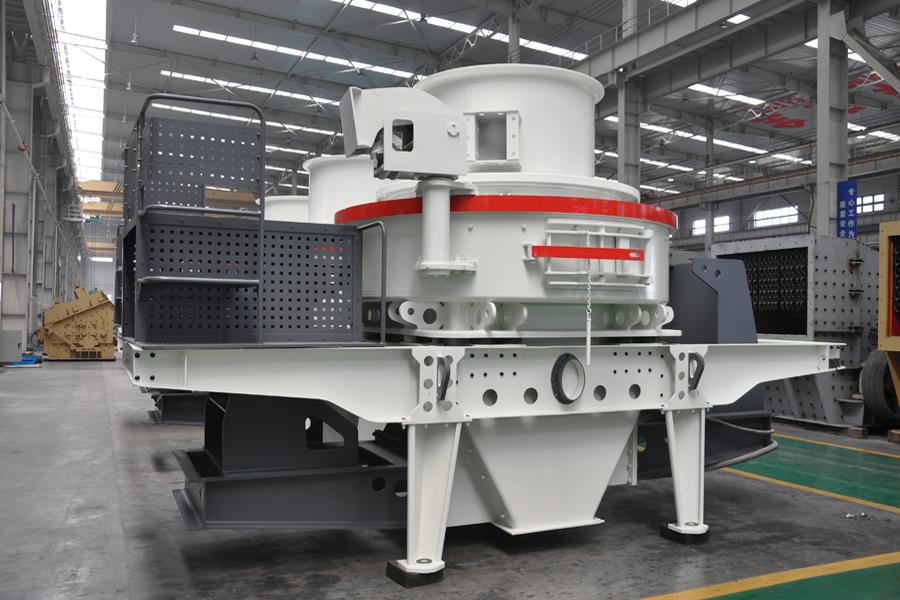
How to Increase the Production Capacity of a Jaw Crusher
Jaw crushers typically serve as the primary crushing equipment in production lines. They are commonly used to break down large rock fragments after blasting, primarily reducing them to a suitable particle size for subsequent processing. Consequently, the production capacity of a jaw crusher directly impacts the output of the entire sand and gravel production line. So, how can we increase the jaw crusher's output while maintaining the required material size?
1. Strictly control feed rate and ensure uniform feeding to prevent blockages caused by overfeeding.
Since jaw crushers operate in a semi-cyclic manner, excessive material input can overwhelm the crushing process. This leads to uncrushed material accumulating while crushed material cannot be discharged promptly, resulting in material jams. Thus, both interrupted feeding and overfeeding impair the jaw crusher's capacity. To ensure even wear on the jaw plates and reduce operating costs, ore should be evenly distributed along the feeder inlet and fully fill the crushing chamber.
2. Feeding Precautions
(1) Prevent iron pieces from entering the crushing chamber. Iron pieces may damage the jaw plates and other components.
(2) Avoid ore height exceeding the fixed jaw plate.
(3) Maximum ore size should be smaller than the jaw crusher's feed opening. Oversized ore easily clogs the crushing chamber, reducing crushing efficiency.
3. Optimize jaw crusher discharge opening and angle to maximize processing capacity.
Setting the discharge opening adjusts the distance between the two jaw plates at the bottom of the crushing chamber. Adjustment ranges vary by equipment model. An excessively small discharge opening causes blockages and excessive energy consumption, leading to severe damage to the crusher. Conversely, an overly large discharge opening increases the load on secondary crushing. The size of the jaw crusher's discharge opening determines its processing capacity. As jaw crushers are typically used for primary crushing, the discharge opening size should be based on the optimal feed size for secondary crushing and should not be arbitrarily increased or decreased.
4. Rhythmic feeding and controlled supply ensure normal jaw crusher operation.
In modern mineral processing plants, the crushing stage predominantly employs end chute feeding. With two-thirds or even the entire feeding device exposed outside the bin, the remote feed inlet transforms the feeding equipment into a vibrating chute. This not only impairs feeding speed but also causes severe wear. The optimal feeding position for the feeder should be within the top one-third of the equipment. Vertical feeding is strictly prohibited to prevent equipment compression that could impair vibration capability or compromise conveying efficiency.
5. Adjustment of Discharge Opening
Adjusting the discharge opening is achieved by adding or removing shims located behind the rocker arm base plate. When measuring the set distance, note the position of the upper eccentric shaft to ensure the lower ends of the fixed and movable jaw plates are at their closest point. At this position, measure the maximum diameter of a circle tangent to both jaw plates, representing the ore size. Use the ring gauge supplied with the machine for measurement. After adjustment, the tension spring must not be overly compressed; avoid spring compression without clearance. Both the support rods and tension springs are subject to fatigue stress and should be replaced every 2-3 years.
6. Jaw Plate Wear and Replacement
Monitoring jaw plate wear conditions and implementing adjustments significantly enhances crusher performance. Regular inspections are recommended to determine when to invert, interchange, or replace jaw plates. Common wear patterns and corresponding actions include:
(1) Bottom of movable jaw plate worn by 1/3; bottom of fixed jaw plate worn by 2/3. Action: Flip both jaw plates.
(2) Top and bottom of movable jaw plate each worn by 1/3, center worn by half; top and bottom of fixed jaw plate each worn by 2/3. Action: Swap both jaw plates.
(3) Both jaw plates are completely worn at the top and bottom. Action: Replace all plates.
7. Strictly control feed size to prevent chamber jamming and blockages.
The design formula for jaw crusher feed openings is: Feed opening size = (1.1~1.25) × Maximum raw material particle size. Particles exceeding the specified maximum size in the feed material are the primary cause of chamber jamming. While blockages may not occur frequently, each instance renders the equipment inoperable for extended periods. Therefore, strict control of feed particle size is one of the most critical prerequisites for ensuring normal operation of the jaw crusher.
(Technical parameters and data mentioned herein may be updated with product upgrades. Click website customer service to obtain the latest equipment specifications.)
The above outlines key considerations for operating jaw crushers. To maximize the efficiency of jaw crushers, attention to operational details is essential for enhancing crushing capacity. We welcome inquiries about crushers at OCP Heavy Industry, where our professionals will provide dedicated assistance! Click website customer service for immediate free consultation, available 24/7.
-
Fault Analysis and Solutions for Vibrating Screens During Operation
-
The Superiority of P Series Hydraulic Cone Crushers for Steel Slag Processing
-
Analysis of the Application Prospects for Construction Waste
-
-
Analysis of Reasons for Vibrating Screen Production Capacity Shortfalls and Solutions