
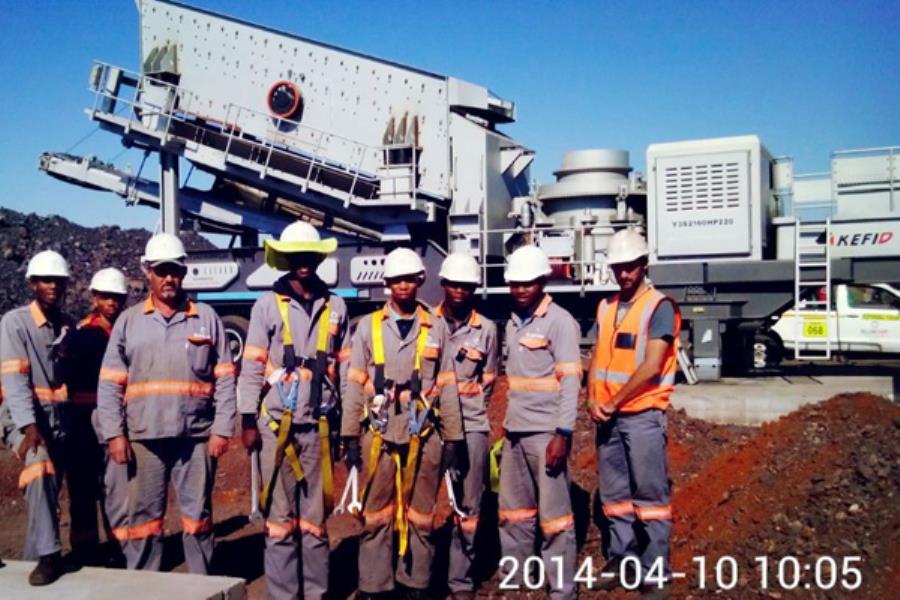
How to choose a vibrating feeder for sticky clay 220 tph
1. Understand the Sticky Clay Challenge
Sticky clay is one of the most difficult materials to handle in a crushing line. It tends to adhere to feeder pans, bridge over hopper outlets, and blind conventional grizzly bars. When asking how to choose a vibrating feeder for sticky clay 220 tph, the first requirement is anti-clogging design. Standard electromagnetic or brute force feeders often fail because clay compacts under vibration. Instead, look for a heavy-duty two-mass or resonant drive system (Type R) that creates a high-stroke, low-frequency motion – this lifts and throws the clay forward rather than simply shaking it. *Actual feeder performance depends on clay moisture content (typically 15-30%), plasticity, and feed uniformity. Always test your material or consult OCP engineers for site-specific recommendations.*
2. Key Features to Look For
For reliable operation at 220 tph in clay-heavy applications (common in Brazil and Nigeria), follow these guidelines when deciding how to choose a vibrating feeder for sticky clay 220 tph:
Use a vibrating grizzly feeder (Type VGF) with stepped or tapered grizzly bars – the bars should have rubber or polyurethane liners to prevent clay from sticking.
Choose a feeder with a variable frequency drive (VFD) – this allows you to adjust amplitude and frequency on the fly. Lower frequencies (600-800 rpm) with higher amplitude (8-12mm) work well for sticky clay.
Install a heated or self-cleaning pan option if clay is extremely wet (above 20% moisture). Some OCP feeders come with polyethylene lining to reduce adhesion.
Ensure the hopper above the feeder has a large outlet (at least 1.5x the feeder width) with mass-flow geometry – no dead zones where clay can accumulate.
*Production data are based on typical clay (density 1.6 t/m³, moisture 18%). For latest parameters, please contact our 24/7 support.*
3. Avoid Common Mistakes That Lead to Downtime
Many operators choose a feeder based only on tonnage, ignoring material characteristics. For how to choose a vibrating feeder for sticky clay 220 tph, avoid these pitfalls:
Oversized grizzly openings – clay bridges across large gaps. Use openings of 50-80mm for clay with occasional rock.
Standard coil springs – they corrode and break in wet clay. Opt for rubber or composite shear mounts.
Underpowered drive – clay requires 30-40% more energy than dry sand. Select a feeder with a motor rating of 15-22 kW for 220 tph.
*A feeder that works for gravel may fail within weeks on clay. OCP Mechanical Company’s experience across 40+ years has proven that cascade-style grizzlies with self-cleaning fingers significantly reduce blinding.*
4. Why OCP Vibrating Feeders Are a Cost-Effective Choice for Clay
As a direct manufacturer with over 40 years of history, OCP Mechanical Company designs feeders specifically for sticky, cohesive materials. Our Type VF-220 model features a dual-rotor exciter, replaceable wear liners, and a hydraulic rock breaker mounted on the grizzly for breaking oversized clay lumps. Because we sell factory-direct, you get competitive pricing and faster spare parts delivery to Brazil or Nigeria. We also offer free remote consulting on hopper angles (recommended 65-70° for clay), grizzly bar spacing, and stroke settings. Prices shown are for reference only – final quotes depend on options and shipping. OCP reserves the right to update technical data without prior notice.
5. Practical Operating Tips
Once you have selected the right feeder, follow these tips for maintaining performance at 220 tph:
Start the feeder at 60% speed when cold clay is present – ramp up gradually.
Spray water at the hopper edge only if absolutely necessary (water makes clay slipperier but can increase downstream moisture).
Inspect the grizzly bars daily – bent or worn bars increase bridging.
Machine efficiency and cost-effectiveness are our design goals, but results depend on proper installation and daily cleaning.
Need help selecting a vibrating feeder for your sticky clay project? Our customer service team is online 24/7 – click the chat button for free quoting, selection advice, or a customized hopper and feeder layout. Let OCP keep your 220 tph line running without clay-related stoppages.
-
Difference between impact crusher and hammer crusher for gypsum
-
How to set up a 350 tph granite crushing line with cone crusher
-
-
-
How to lubricate a cone crusher in high temperature environment