Difference Between Impact and VSI for Sand Making
For sand producers in North America and Europe, choosing the right crusher for manufactured sand production directly affects product shape, operating costs, and downstream concrete performance. Understanding the difference between impact and VSI for sand making helps you select the most efficient machine for your rock type and product specifications. An impact crusher (Type I) and a vertical shaft impactor (Type V) are both used for sand making, but they work on different principles and yield different results. Below we compare their mechanisms, product quality, wear costs, and energy consumption. OCP Mechanical Company supplies both types with factory‑direct pricing and 24/7 online support.
Crushing Principle and Mechanism
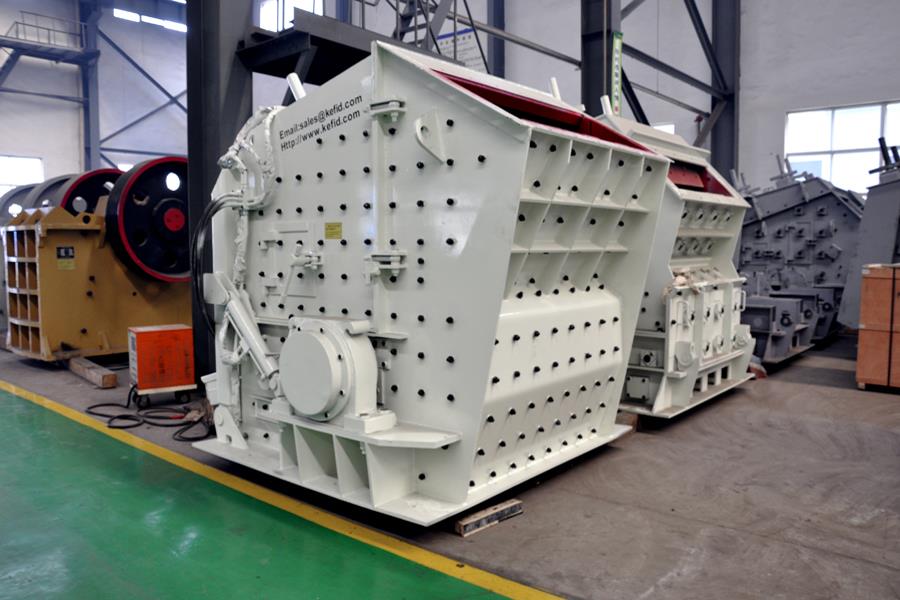
The primary difference between impact and VSI for sand making lies in how they break rock. An impact crusher uses horizontal blow bars that spin and strike incoming material against breaker plates. It relies on high‑speed impact to fracture rock, achieving a reduction ratio of up to 15:1 in a single pass. A VSI (vertical shaft impactor) throws rock against a rock chamber (rock‑on‑rock) or anvil rings using centrifugal force from a high‑speed rotor. The rock‑on‑rock action produces less metal wear and generates a more cubical product. For hard, abrasive rock, the VSI is widely preferred. Note: Product data are constantly updated; for the latest specifications of Type I and Type V, please contact our online customer service.
Many sand plants in Germany and Canada have found that a VSI produces better particle shape for high‑strength concrete, while an impact crusher can be a cost‑effective option for softer limestone.
Product Shape and Fines Control
Another key difference between impact and VSI for sand making is the shape of the final product and the ability to control fines content. An impact crusher tends to produce a higher proportion of fines (0‑5 mm) in a single pass, which is good for sand. However, particles can be more elongated or flaky, which may reduce concrete workability. A VSI produces cubical particles with low flakiness, ideal for high‑strength concrete standards such as ASTM C33 or EN 12620. Fines content can be precisely controlled by adjusting rotor speed and cascade ratio. For concrete sand, a VSI is widely regarded as the superior option.
All performance data in this article are for reference only; contact our team for site‑specific recommendations.
Producers in the UK and France have reduced their cement consumption by 5‑8% after switching from an impact crusher to a VSI for sand production.
Wear Cost and Energy Consumption
The most practical difference between impact and VSI for sand making for most operators is the cost per ton of wear parts and energy. In an impact crusher, blow bars (chrome iron or martensitic) wear quickly in hard, abrasive rock. For granite or basalt, blow bar life may be only 80‑150 hours, and the cost per ton can be 0.08‑0.20. In a VSI, tungsten carbide rotor tips last 100‑200 hours in hard rock, processing 12,000‑25,000 tons per set, with a cost per ton of 0.03‑0.08. Energy consumption: impact crushers typically use 0.8‑1.2 kWh per ton; VSI uses 1.5‑3.0 kWh per ton for sand making, but the improved shape and reduced cement demand often offset the higher energy cost. All price information in this article is for reference only; contact our team for current quotes.
For limestone or softer rock, an impact crusher may be more economical due to lower wear part cost.
Which One Should You Choose?
The difference between impact and VSI for sand making leads to these practical recommendations:
Choose an impact crusher (Type I) for soft to medium rock (limestone, dolomite, river pebble) when concrete sand specifications are not extremely strict. Lower capital cost, but higher wear cost in hard rock.
Choose a VSI (Type V) for hard, abrasive rock (granite, basalt, quartzite) when you need cubical sand for high‑grade concrete or asphalt. Higher upfront cost but better shape and often lower wear cost per ton.
Many operators in North America and Europe use a VSI for final sand shaping after a cone crusher, ensuring consistent cubicity.
OCP Mechanical Company has over 40 years of history in crushing equipment. We offer factory‑direct pricing on both impact crushers and VSI, with local parts support and 24/7 online technical assistance.
For a no‑obligation consultation and a detailed difference between impact and VSI for sand making for your rock, simply click the live chat icon on this page. Our online customer service team is available 24 hours a day, 7 days a week, to answer your technical questions, provide free recommendations, and help you select the best crusher for your sand production needs.