Cone Crusher vs HPGR for Fine Crushing Iron Ore
For iron ore mines in Brazil and Sweden, choosing between a cone crusher and a high pressure grinding roll (HPGR) for fine crushing affects energy consumption, wear costs, and downstream grinding efficiency. In the cone crusher vs HPGR for fine crushing iron ore debate, both technologies have proven applications. Understanding their differences helps you select the most economical solution for your ore hardness and product size requirement. Below we compare key factors and how OCP Mechanical Company supports both options with factory‑direct equipment and expert advice.
Operating Principle and Product Size
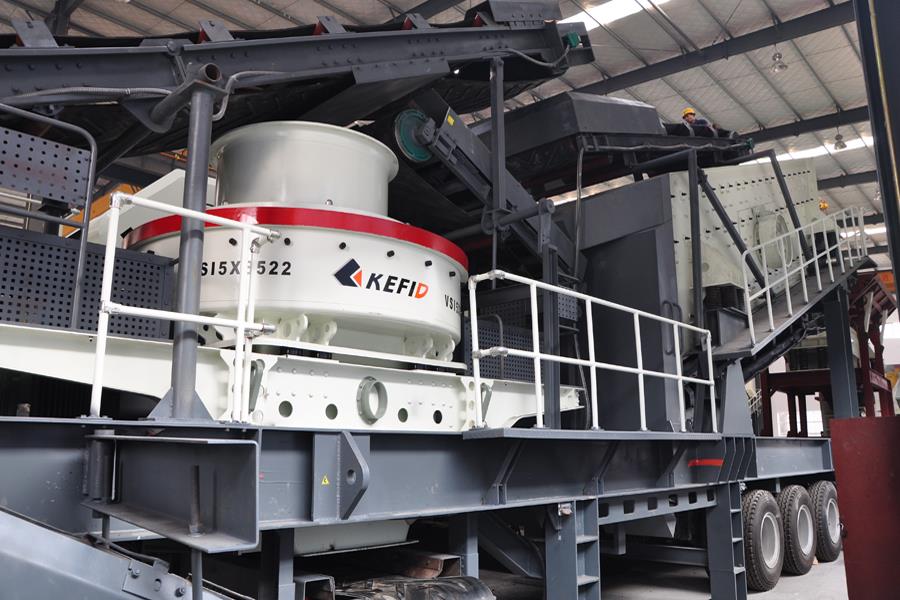
When evaluating cone crusher vs HPGR for fine crushing iron ore, the first difference is how they break rock. A cone crusher (Type C) uses compression between a mantle and bowl liner, producing a product with a P80 typically between 6‑15 mm for fine crushing. It is a well‑established technology for hard, abrasive iron ores like hematite and magnetite.
In contrast, an HPGR uses two counter‑rotating rolls with high pressure to fracture material. It produces a product with a P80 of 2‑5 mm and generates micro‑cracks that improve ball mill throughput. The cone crusher vs HPGR for fine crushing iron ore comparison shows that HPGR can achieve a finer product and reduce downstream grinding energy by 10‑30%. However, HPGR requires a drier feed (moisture <5%) and is more sensitive to tramp metal.
OCP offers Type C cone crushers for iron ore and can also supply HPGR units through strategic partnerships. Note: Product data are constantly updated; for the latest specifications of Type C and HPGR, please contact our online customer service.
Many operations in the Carajás region (Brazil) and Kiruna (Sweden) have successfully used cone crushers for decades. More recent projects have adopted HPGR for energy savings, especially in magnetite ores.
Wear Cost and Energy Consumption
Another critical aspect of cone crusher vs HPGR for fine crushing iron ore is operating cost. Cone crusher liners (Mn18%+Cr) typically last 1,000‑2,500 hours in hard iron ore, with wear cost per ton ranging from $0.05‑$0.12. Energy consumption is 0.6‑1.0 kWh per ton.
HPGR wear parts (roll tyres) are more expensive. A set of tungsten carbide or hardfaced tyres may cost $50,000‑$150,000 and last 5,000‑10,000 hours, resulting in a cost per ton of $0.03‑$0.08 – often lower than a cone crusher in high‑tonnage operations. Energy consumption for HPGR is typically 0.8‑1.5 kWh per ton, slightly higher than a cone crusher, but the downstream ball mill energy saving offsets this.
The cone crusher vs HPGR for fine crushing iron ore trade‑off: cone crushers have lower capital cost and are simpler to maintain; HPGR has higher capital cost but can reduce overall comminution energy by 15‑25% when integrated with ball milling.
The above values are for illustration only. OCP continuously improves its products. Contact our online team for the most current data sheet.
Which Is Better for Your Iron Ore?
The cone crusher vs HPGR for fine crushing iron ore decision depends on your specific parameters:
Choose a cone crusher (Type C) for smaller tonnages (<2 million tpy), variable ore hardness, or when feed contains clay or moisture. Also preferred if you already have a cone crusher circuit and want to expand.
Choose an HPGR for high‑tonnage (>5 million tpy), dry, competent ores where energy savings justify the capital investment. HPGR is particularly effective for magnetite ores where liberation improves with micro‑cracking.
Many mines in Minas Gerais have adopted HPGR for tertiary crushing to increase ball mill throughput. However, cone crushers remain a reliable, cost‑effective choice for many medium‑scale operations.
As a direct‑selling manufacturer, OCP provides both cone crushers and HPGR systems, offering unbiased recommendations based on your ore sample. We ship to Santos, Rio de Janeiro, or Gothenburg ports within 20‑25 days.
Why OCP Is Your Partner for Iron Ore Crushing
Understanding cone crusher vs HPGR for fine crushing iron ore helps you make an informed investment. OCP Mechanical Company has over 40 years of history in crushing equipment. We offer:
Free pre‑sale ore testing to recommend the optimal technology and circuit design.
A customized quotation for cone crushers or HPGR, including wear parts supply.
24/7 online technical support for installation, operation, and optimization.
Our cone crushers have been successfully deployed in iron ore projects across Brazil, Sweden, and other mining regions. For customers who choose HPGR, we partner with leading roll press manufacturers to deliver integrated solutions.
For a no‑obligation consultation and a detailed cone crusher vs HPGR for fine crushing iron ore analysis for your mine, simply click the live chat icon on this page. Our online customer service team is available 24 hours a day, 7 days a week, to answer your technical questions, provide free recommendations, and help you lower your cost per ton of iron ore.