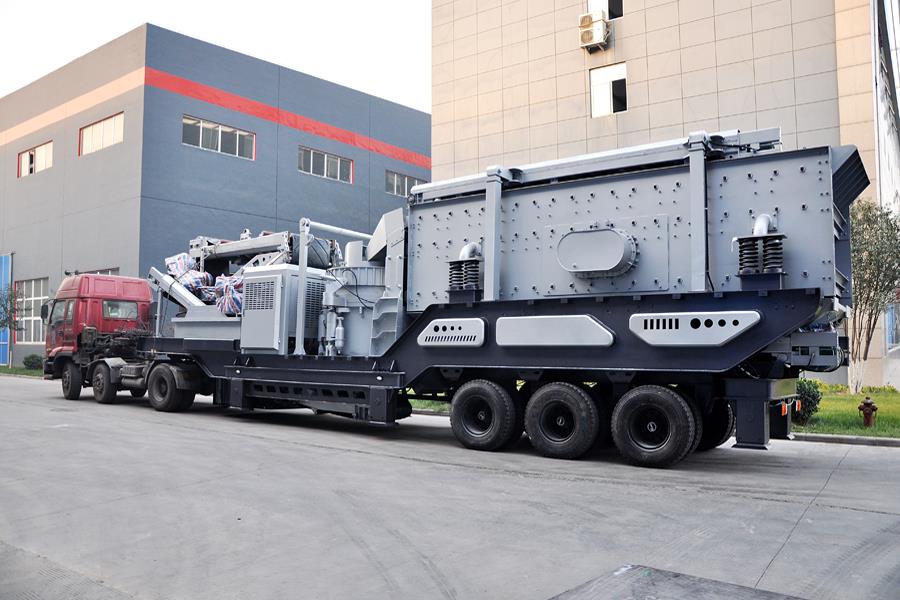
Best way to crush trachyte 100 tph with impact crusher
For quarry operators in Brazil processing trachyte – a hard, alkaline volcanic rock found in the Paraná Basin, the Serra Geral formation, and parts of Minas Gerais – a 100 tph impact crusher is a highly efficient solution for producing cubical aggregates for concrete and road base. Trachyte has a compressive strength of 100‑200 MPa and can be abrasive due to its feldspar and quartz content. An impact crusher delivers a high reduction ratio (up to 15:1) and produces a well‑shaped product with predictable wear costs. Understanding the best way to crush trachyte 100 tph with impact crusher helps you achieve maximum throughput, minimize downtime, and lower cost per ton. OCP Mechanical Company, a factory‑direct manufacturer with over 40 years of experience, supplies Type I impact crushers designed for South American hard rock, backed by 24/7 online support.
Note: Product data are constantly updated; the latest specifications should be confirmed with our online customer service.
Why a single‑stage impact crusher is a practical choice for trachyte
Trachyte is often used for concrete aggregates and railway ballast. A single‑stage impact crusher (Type I-100) with a 132‑160 kW motor, two or three breaker curtains, and reversible blow bars can accept feed up to 400‑500 mm and produce 90‑110 tph of 0‑40 mm product in one pass. The high reduction ratio allows a single impact crusher to replace a jaw‑cone circuit, saving capital and maintenance costs. Many Brazilian trachyte quarries have successfully operated impact crushers of this size, reporting consistent output and blow bar life of 300‑500 hours with Cr20% alloy. For trachyte with high quartz content, upgrading to Cr26% adds 30‑50% longer life.
Key parameters to optimize crushing efficiency
The best way to crush trachyte 100 tph with impact crusher involves setting the right operating parameters:
Curtain gaps – For a typical 0‑40 mm road base product, set the primary curtain gap to 40‑60 mm and the secondary curtain to 20‑30 mm. For a finer product (0‑20 mm), tighten the secondary curtain to 10‑15 mm.
Rotor speed – Start at 550 rpm. If the product is too coarse, increase speed by 20 rpm; if too many fines, decrease speed. Use a variable frequency drive (VFD) to fine‑tune. For trachyte, speeds of 500‑600 rpm are widely used.
Choke‑fed condition – Maintain a full crushing chamber to ensure even blow bar wear and consistent product shape.
Remove fines before the crusher – Use a vibrating grizzly feeder to scalp out material below 20‑30 mm. This reduces blow bar wear and increases net throughput by 10‑15%.
Many Brazilian operators have achieved 100 tph consistently by following these practices, with blow bar life exceeding 400 hours.
How to reduce blow bar wear and operating cost
To extend blow bar life when crushing trachyte:
Rotate blow bars – Flip reversible bars every 150‑200 hours to use both edges. This can extend life by 30‑50%.
Control feed size – Avoid oversize lumps (>150‑200 mm) that cause severe impact damage.
Use a magnetic separator – Remove tramp metal (e.g., digger teeth) that can break blow bars.
Monitor blow bar wear – Replace when wear reaches 50‑60% of original height. Worn bars damage the rotor and impact plates.
All price information in this article is for reference only; contact our team for a current, site‑specific quote.
A Type I-100 impact crusher ex‑works typically ranges from $45,000 to $75,000 USD. Shipping to Brazilian ports (Santos, Rio de Janeiro) adds $6,000‑$12,000. A starter set of blow bars, impact plates, and V‑belts adds $2,500‑$4,000. Total landed cost is approximately $55,000‑$90,000 USD.
Return on investment and operational tips in Brazil
At 100 tph for 2,500 hours/year (250,000 tons), annual operating costs (blow bars, electricity, maintenance) are $20,000‑$35,000. Selling trachyte aggregates in Brazil at $8‑$12 per ton generates $2‑$3 million in revenue, providing a rapid payback often within 6‑12 months. For Brazilian conditions, install dust suppression (water sprays) to meet local environmental standards. During the rainy season, reduce feed rate slightly to prevent packing. Keep a spare set of blow bars on site – shipping from overseas can take 3‑4 weeks.
Why OCP is your trusted impact crusher supplier for trachyte in Brazil
Understanding the best way to crush trachyte 100 tph with impact crusher is only the first step – you also need a partner who backs you with technical advice and responsive support. OCP Mechanical Company has four decades of experience in impact crusher technology for the Brazilian hard rock market. Our 24/7 online team helps with curtain adjustment, blow bar rotation, and troubleshooting. We invite you to request a no‑obligation quote and experience factory‑direct pricing.
For a no‑obligation consultation on the best way to crush trachyte 100 tph with impact crusher, simply click the live chat icon on this page. Our online customer service team is available 24 hours a day, 7 days a week, to provide free price quotes, equipment recommendations, and installation advice – helping you crush trachyte more efficiently and profitably.
-
Price list of jaw plates for diorite quarry in Luzon Philippines
-
How to set CSS on a cone crusher for tantalite 45 tph in Rwanda
-
Purchase a vibrating grizzly feeder for nickel laterite 190 tph in Sulawesi Indonesia
-
Cost of VSI sand maker for recycled concrete 55 tph in Netherlands
-
Need after sales support for cone crusher in Tbilisi Georgia