90-110 TPH Bauxite Jaw Crusher Maintenance Guide in Guinea
Why a structured maintenance program for your jaw crusher is essential for bauxite operations in Guinea
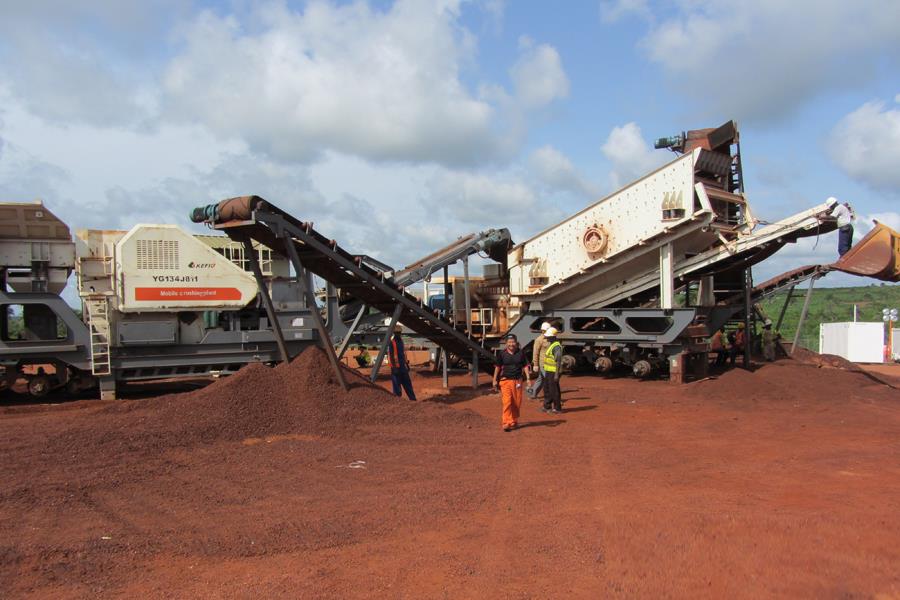
Guinea stands as the world's top bauxite exporter, with the country's bauxite output reaching 183 million tonnes in 2025 and surging 25% in the first quarter of 2026 alone, driven largely by Chinese demand. Government policies are evolving, including market rumours of a potential export cap of 150 million tonnes, which would reshape supply dynamics. For mining operators processing bauxite at 90-110 tonnes per hour, the jaw crusher is the workhorse of the primary crushing circuit. Its reliability directly determines plant availability, throughput, and operating costs. Bauxite, while softer than granite or basalt, can be abrasive and contains moisture that affects crushing performance. A well-maintained jaw crusher can deliver years of consistent service, while neglect leads to costly breakdowns, reduced production, and premature equipment failure. Understanding the 90-110 TPH bauxite jaw crusher maintenance guide in Guinea is therefore essential for operators who want to maximise uptime, control costs, and maintain consistent production. At OCP Mechanical Company, with over 40 years of manufacturing experience, we supply PE Series and PEW Series jaw crushers engineered for reliable performance in bauxite applications, and we provide practical maintenance guidance to help Guinean operators achieve long-term equipment reliability.
Understanding bauxite and its impact on jaw crusher wear
Bauxite is a heterogeneous material composed of aluminium hydroxide minerals, clay, and other impurities. Its moisture content can vary significantly depending on the deposit and the season, affecting material flow and crushing efficiency. The presence of clay and fines can cause material build-up in the crushing chamber, leading to reduced throughput and accelerated wear on the jaw plates. In Guinea's tropical climate, where rainfall is heavy during the wet season, bauxite can become sticky and difficult to process. This makes regular maintenance and inspection particularly important. For a 90-110 TPH operation, the jaw crusher must be equipped with wear-resistant jaw plates—typically high-manganese steel (14-18% Mn)—that can withstand the abrasive nature of bauxite while maintaining consistent product size. The closed side setting (CSS) should be monitored and adjusted regularly to compensate for wear and maintain product specification. Our PE Series and PEW Series jaw crushers are engineered with heavy-duty construction and high-quality wear parts, delivering reliable performance in bauxite applications. All product specifications, including capacity and power ratings, are continuously updated; for the latest parameters, please consult our online customer service.
Daily maintenance – the foundation of reliable operation
A disciplined daily maintenance routine is the first line of defence against unexpected breakdowns. Before starting operations, operators should perform a thorough pre-shift inspection. Start with a walk-around inspection of the crusher, checking for any loose bolts, nuts, or fasteners and tightening them as needed. Inspect the jaw plates for excessive wear, cracks, or damage, and verify proper alignment. The toggle plate and seats should be checked for lubrication and wear patterns. The eccentric shaft bearings must be inspected, checking bearing temperatures and listening for unusual sounds. The lubrication system should be reviewed, checking oil levels, inspecting for leaks, and verifying oil flow. During operation, operators should monitor for unusual vibrations, listen for abnormal sounds, check discharge product consistency, and observe power consumption. After the shift, the crusher should be allowed to clear all material before shutdown. These daily checks, when performed consistently, catch developing issues before they become costly failures. Our jaw crushers are designed with accessible inspection points that simplify these daily checks, enabling operators to maintain consistent oversight. All product specifications, including capacity and power ratings, are continuously updated; for the latest parameters, please consult our online customer service.
Weekly maintenance – deeper inspections and proactive care
Weekly maintenance involves more thorough inspections and servicing. The lubrication system should be checked, with oil changed according to manufacturer specifications, filters cleaned or replaced, and oil lines inspected for blockages. The jaw plates should be checked for proper nip angle, the discharge setting adjusted if needed, and wedge bolts inspected for tightness. Structural components should be inspected, with all mounting bolts tightened, the frame inspected for cracks, foundation integrity verified, and guard conditions checked. The toggle plate and seat should be inspected for wear. The flywheel and V-belts should be checked for condition and proper tension. Safety devices and emergency stops should be tested. These weekly tasks prevent small issues from escalating into major problems. In Guinea's remote mining regions, where access to specialised maintenance services may be limited, a disciplined weekly maintenance program is particularly valuable. Our PE Series and PEW Series jaw crushers are designed with maintenance-friendly features that simplify these weekly inspections. Prices are for reference only and are subject to change based on configuration and market conditions.
Monthly maintenance – comprehensive assessment and planning
Monthly maintenance involves a comprehensive inspection of all crusher components. Wear parts should be assessed by measuring jaw plate thickness, documenting wear patterns, planning replacement schedules, and ordering spare parts proactively. Mechanical systems should be inspected, including flywheel alignment, eccentric bearing clearances, safety device testing, and drive motor condition verification. Electrical systems should be checked, including emergency stops, wiring connections, control panel functionality, and sensor operations. Bearing temperatures should be monitored closely; under normal running conditions, the temperature rise across a bearing should not exceed 30 degrees Celsius above ambient, and the absolute bearing temperature must never exceed 70 degrees Celsius. If either threshold is crossed, the machine must be shut down immediately. Monthly maintenance also provides an opportunity to review production records, identify patterns, and optimise maintenance schedules. In Guinea's bauxite operations, where production targets are high and downtime is costly, this structured approach to monthly maintenance is essential for achieving consistent throughput and controlling operating costs.
Lubrication – the lifeblood of your jaw crusher
Proper lubrication is critical to preventing premature bearing failure. Grease selection must match the operating environment, with ambient temperature driving the choice. In Guinea's tropical climate, where temperatures are consistently high, using the correct high-temperature grease is essential. Each bearing housing should be filled to roughly 50 per cent of its internal cavity volume, never more. Overpacking traps churned grease, raises running temperature, and can cause bearing failure. Grease should be replaced every 3 to 6 months, and during each change, the roller raceways should be washed with clean solvent to flush out metallic wear particles. An adequate charge of grease should be injected between the toggle plate and its seat before every cold start, as this contact surface depends entirely on pre-start lubrication. For a 90-110 TPH bauxite operation, where the crusher runs continuously, maintaining a rigorous lubrication schedule is essential for preventing the most expensive failures. Our jaw crushers feature accessible lubrication points that simplify this critical maintenance task.
Common problems and troubleshooting
Even with regular maintenance, operators may encounter common problems. Reduced crushing capacity is often caused by worn jaw plates, incorrect discharge setting, or material buildup in the chamber. Solutions include replacing worn jaw plates, adjusting the discharge opening, and cleaning the crushing chamber. Excessive heat typically indicates bearing failure, insufficient lubrication, or overloading. Solutions include replacing bearings, checking the lubrication system, and reducing feed rate. Abnormal vibrations may be caused by an unbalanced flywheel, loose mounting bolts, or foundation problems. Solutions include rebalancing the flywheel, tightening all bolts, and inspecting the foundation. Excessive wear on jaw plates is often the result of feeding oversized material, an incorrect CSS, or feed distribution issues. Solutions include screening the feed, adjusting the CSS, and ensuring even feed distribution. By understanding these common problems and their solutions, operators can quickly diagnose and resolve issues, minimising downtime and maintaining production.
Safety considerations – protecting your team and your equipment
Safety must always be the priority during maintenance. Before performing any maintenance or inspections, lock out and tag out the equipment. Wear appropriate personal protective equipment, including goggles, gloves, and a dust mask. Follow the manufacturer's safety guidelines and use proper lifting equipment for heavy parts. Never work on equipment while it is operating, bypass safety devices, use worn or damaged tools, or ignore warning signs. In Guinea's bauxite operations, where sites are often remote and access to emergency services may be limited, a strong safety culture is essential. Our after-sales support includes safety training and maintenance guidance to help operators protect their teams and their equipment.
Why OCP Mechanical is your partner for reliable crushing solutions in Guinea
With over 40 years of manufacturing experience, OCP Mechanical combines engineering excellence with a deep understanding of the challenges facing bauxite operators in Guinea. We are a factory-direct supplier, meaning you avoid the markups charged by dealers and intermediaries. Our PE Series and PEW Series jaw crushers are built with high-quality components and are designed for reliable performance in the most demanding applications. We provide comprehensive after-sales support, including spare parts availability, technical assistance, and on-site training. Our logistics team has extensive experience shipping to Guinea, ensuring timely delivery of equipment and parts. We are committed to helping you achieve efficient, productive bauxite crushing that supports your business growth.
Conclusion – Implement a structured maintenance program and protect your investment
A structured maintenance program is the key to maximising the lifespan and performance of your jaw crusher in Guinea's challenging bauxite environment. By following the daily, weekly, monthly, and lubrication practices outlined in this 90-110 TPH bauxite jaw crusher maintenance guide in Guinea, you can significantly reduce unplanned downtime, extend wear part life, and control operating costs. OCP Mechanical offers the equipment, expertise, and factory-direct pricing you need to succeed. Our online customer service team is available 24/7 to provide free consultation, technical data, and a customised quotation for your operation. Click the chat button now – let us help you build a reliable and profitable bauxite crushing operation in Guinea.